
Choosing a Fire Alarm System for Small Business
[yasr_overall_rating]
A false alarm at 2 a.m. is frustrating. A missed alarm during business hours is far worse. For owners and managers, choosing a fire alarm system for small business is not about checking a box – it is about protecting people, limiting downtime, and making sure your property can reopen quickly after an incident.
Small commercial spaces rarely need the same setup as a high-rise or hospital, but they do need more than a basic off-the-shelf solution. The right system has to fit your occupancy, your layout, your local code requirements, and the way your team actually uses the building every day. If it is not designed and installed correctly, even good hardware can become a liability.
What a fire alarm system for small business needs to do
At a minimum, a commercial fire alarm system must detect trouble early, notify occupants clearly, and support a fast response. That sounds simple, but the details matter. A daycare, smoke shop, retail store, office suite, warehouse bay, and jewelry store all have different risk profiles, traffic patterns, and code considerations.
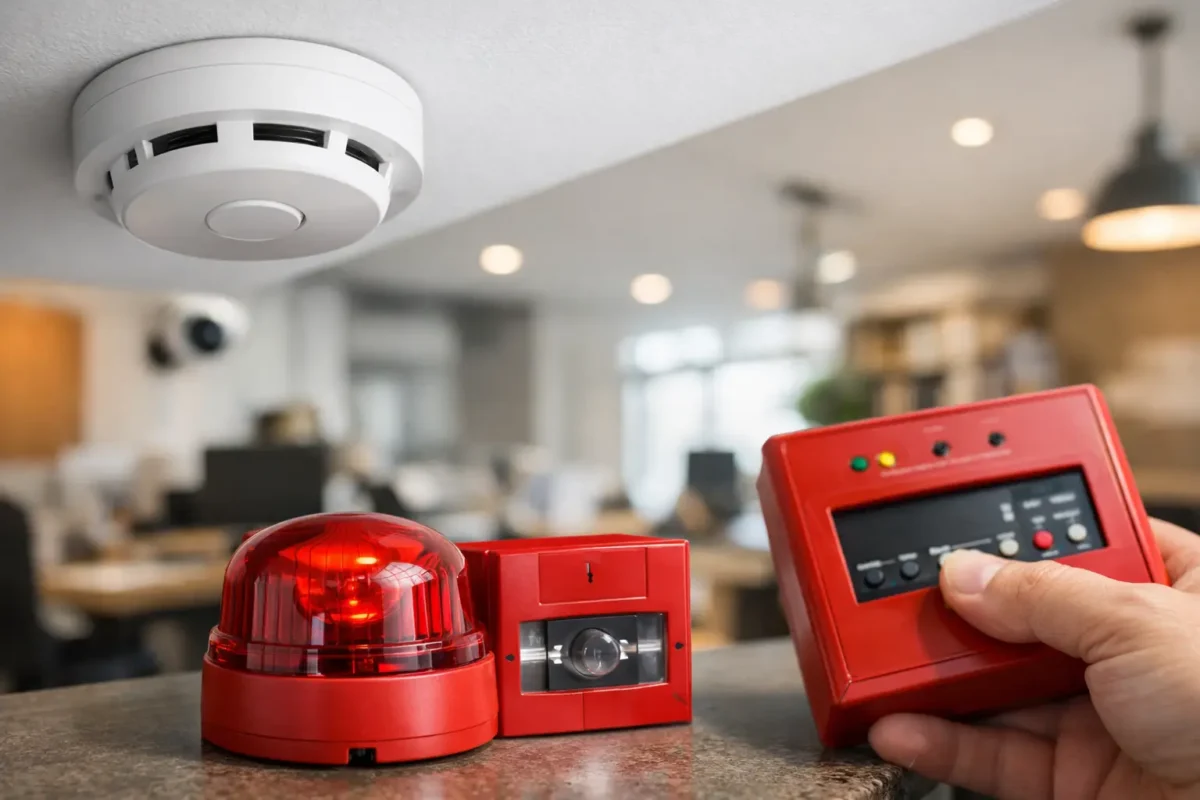
A small business system usually includes a control panel, smoke or heat detection devices, pull stations, notification appliances such as horns and strobes, backup power, and often monitoring. In some spaces, you may also need duct detectors, sprinkler monitoring, carbon monoxide detection, elevator recall interfaces, or door release integration. The right configuration depends on the building, not just the square footage.
That is where many owners get tripped up. They assume smaller property means simpler requirements. Sometimes that is true. Sometimes a single tenant improvement, a remodeled back room, or a change in occupancy creates a very different set of obligations.
Start with occupancy, not equipment
When business owners shop by device count alone, they usually either overspend or miss something important. The better starting point is occupancy type and daily use. If you run a daycare, the priority is fast occupant notification, reliable initiation devices, and clean installation that does not interfere with operations. If you manage a smoke shop or convenience-style retail space, you may be balancing fire protection with intrusion, after-hours risk, and limited staffing. If you operate a jewelry store, system reliability and proper integration with the rest of your security infrastructure matter more than bargain pricing.
The building itself also drives decisions. Older tenant spaces often have wiring constraints, outdated panels, or code issues that only become visible during inspection or retrofit planning. Newer spaces may support cleaner installation paths, but that does not mean the design can be generic.
A good provider looks at ceiling height, wall construction, HVAC layout, entry and exit patterns, existing fire sprinklers, and whether you need local-only notification or central station monitoring. That is how you end up with a system that performs well over time instead of one that only looks complete on paper.
Conventional vs. addressable systems
For many small businesses, one of the first practical questions is whether to install a conventional or addressable fire alarm system. There is no universal winner. It depends on the size of the property, the complexity of the layout, and how much visibility you want when something goes wrong.
A conventional system groups devices into zones. It can be a cost-effective fit for smaller, straightforward spaces where basic detection and notification are enough. If a zone goes into alarm, you know the general area but not always the exact device.
An addressable system identifies the specific detector, pull station, or module that triggered the event. That gives you better troubleshooting, clearer event reporting, and easier maintenance in larger or more segmented spaces. It usually costs more upfront, but in the right environment it can save time during service calls and reduce disruption when issues occur.
For a small single-suite retail store, conventional may be perfectly appropriate. For a multi-room commercial property, a business with sensitive inventory, or a site that expects future expansion, addressable often makes more sense. This is one of those decisions where cheap and cost-effective are not always the same thing.
Monitoring, inspection, and response
Many owners focus on devices and forget the response chain. Detection matters, but what happens next matters just as much. Depending on local requirements and your insurance expectations, monitored fire alarm service may be part of the right setup.
Monitoring can help ensure alarms are transmitted promptly, especially after hours when the building is empty. For businesses with irregular staffing, valuable inventory, or multiple locations, that added layer can make a real operational difference. On the other hand, not every small space needs the exact same monitoring structure, and local AHJ requirements should guide that decision.
Inspection and testing also need to be treated as part of ownership, not an afterthought. Fire alarm systems require periodic testing, documentation, and maintenance. If the system was pieced together without a clear service plan, even minor issues can turn into expensive disruptions later. A dependable partner should be able to explain not just installation, but inspection intervals, testing procedures, and how support will be handled when a trouble signal appears.
Why installation quality matters more than brochure specs
Business owners are often shown a list of devices and told they are getting a complete system. That is not enough. A properly designed fire alarm system for small business depends heavily on placement, programming, power calculations, notification coverage, and code-compliant integration.
Poor installation creates real problems. Devices may be placed in the wrong locations. Notification appliances may not provide effective coverage. Panels may be difficult to service. Wiring may be messy or undocumented. Even if the system technically turns on, that does not mean it will pass inspection cleanly or hold up under long-term use.
Professional installation is also about coordination. If your site has cameras, access control, intrusion alarms, sprinklers, low-voltage cabling, or a remodel in progress, the fire alarm work needs to fit into that larger picture. Businesses benefit when the installer understands how life safety infrastructure interacts with the rest of the property instead of treating it as an isolated project.
Common mistakes small businesses make
The most common mistake is buying for price first and compliance second. That often leads to replace-and-redo costs later. Another frequent issue is assuming residential-grade equipment is close enough for light commercial use. It usually is not.
Some owners also underestimate growth. They install the minimum for current use, then expand into adjacent space, add storage areas, or reconfigure operations a year later. A slightly more capable panel or a better-planned layout at the beginning can prevent expensive changes down the line.
The last major mistake is treating support as optional. Fire alarm systems are not a one-time purchase. If your provider cannot help with troubleshooting, service calls, testing, replacement parts, or code-related questions, you are carrying more risk than you think.
How to evaluate the right provider
You are not only buying hardware. You are choosing who will stand behind a life safety system after install day. That changes how the buying process should work.
Look for a provider that asks about occupancy, site conditions, code compliance, future expansion, and service expectations before recommending equipment. You want business-grade products, clear installation scope, and realistic timelines. You also want to know who handles programming, inspection coordination, warranty support, and same day service if something fails.
For West Coast businesses, especially in Seattle and California markets, local experience matters because permitting, inspection expectations, and building conditions can vary significantly. A provider with real operational experience can spot issues early and prevent delays that a generic online seller will never see.
This is where a company like Tech Security USA stands apart. The value is not just access to hardware. It is the ability to get a system designed correctly, installed through qualified professionals, and supported after the sale without chasing multiple vendors.
The right system is the one you can trust under pressure
A fire alarm system should be easy to ignore when everything is normal and impossible to doubt when something is wrong. For a small business, that means choosing a system based on building use, code requirements, installation quality, and ongoing support – not just the lowest quote.
If your current setup is outdated, unclear, or not keeping pace with your business, it is worth getting it reviewed before a problem forces the issue. The best time to fix a fire alarm system is long before anyone has to depend on it.
Posted on GoogleTrustindex verifies that the original source of the review is Google. I visited the Tech Security USA orange to install security cameras for my home. I found it a very professional company, with high quality products that were made me impressed. I recommend it to anyone who are looking a professional security cameras company in onrange city of Orange County CA.Posted on GoogleTrustindex verifies that the original source of the review is Google. “Edit (this review is not “spam” which the owner claims it is and the story is absolutely real however it was about 2 years ago and if I wasn’t shy back then(9th grade) or I wish I had done/said something about my dad and I being taken advantage of as it was a scam (quoted at around $150 but after having to wait 3weeks instead of 3 days for the guy to charge us $300 for a cheap screen that no longer had a haptic button or working Touch ID along with many white pressure dots along the edges). Do not go here. If you look at most of their 5-star reviews, they are older than 7 years. I went here recently to fix my iPad Air (3rd gen). The problem was the screen's backlight wouldn't work, so it would just show a black image. The technician said he could get it done for around $150 and in 2-3 days he would call us (my dad and I). After a week of waiting, we decided to call but to no avail. We went to the place to check up on the work done, if any. We got there and the iPad was in the exact same spot as the day we left it there. The guy told us it would be ready in about 4 days, no later, and that he would call us. We never got the call, so we went back after about another 3 days of waiting for a call (2 weeks now). After waiting, we went back to the store for the iPad, and it appeared to us as if he had just gotten started by breaking the screen to replace it. After another week, we came back and he pulled it out from a drawer saying something along the lines of, "I was about to call you guys." The screen was working, but it was clearly a cheap screen that was ordered online, and the Touch ID didn’t work anymore. The button was replaced with a non-haptic one. There are many white dots along the edges of the screen that look as if someone pressed their thumb down too hard for too long. The guy said with all the "extra" work done to it, the new total would be $300. When my dad and I looked at each other, we knew that wasn’t right, but I watched my dad grab his wallet and pay. I wish I had said something because we were taken advantage of, and after a week, the iPad's screen isn’t functioning properly as it feels unresponsive.Posted on GoogleTrustindex verifies that the original source of the review is Google. Will somebody please tell the owner to stop responding? She’s only validating the bad reviews.Posted on GoogleTrustindex verifies that the original source of the review is Google. Little messy inside but brought an old Moto Z2 Play in to finalize my failed battery self install. Done when promised, phone looked as good as new and works fine. I'm happy.Posted on GoogleTrustindex verifies that the original source of the review is Google. Garbage screen quality do not come here the screen is more different then a regular apple screen they use low quality screens the whole screen shattered and has black lines throughout it after a tiny drop with a screen protector.Posted on GoogleTrustindex verifies that the original source of the review is Google. I needed a battery replacement for my Huawei p10, the engineer fixed it in a few days (he had to order the battery) and it was reasonable priced, very good, thank youPosted on GoogleTrustindex verifies that the original source of the review is Google. Great location and employees. Really came through when I needed help. Recommend this place to anyone.Posted on GoogleTrustindex verifies that the original source of the review is Google. My go to place for any laptop and iPhone repairs. Also very friendly and experienced guy James.
Resent Posts
How to Design Jobsite Surveillance That Works
21 October 2026
Surveillance System Maintenance Guide for Uptime
19 October 2026
Table of Contents