
Wholesale Security Cameras for Contractors
[yasr_overall_rating]
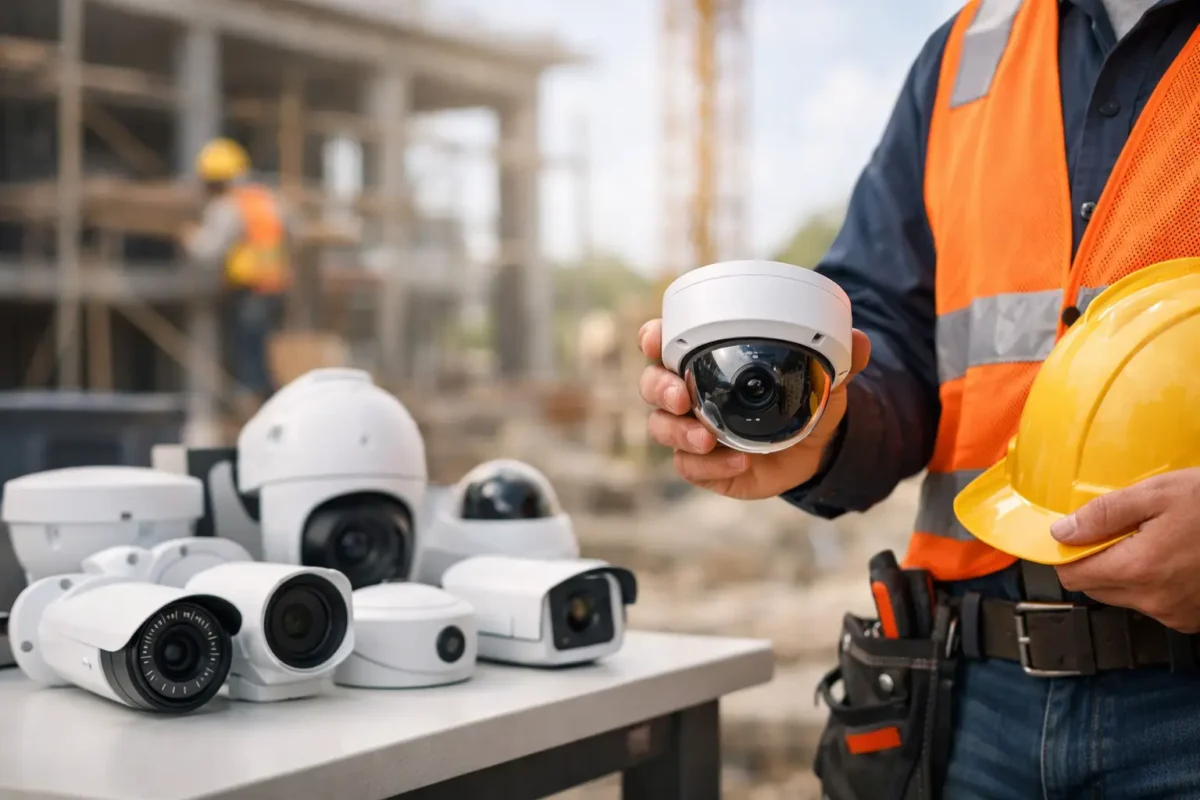
When a project is moving fast, camera decisions usually get pushed to the last minute. That is where wholesale security cameras for contractors can either keep a job on schedule or create expensive callbacks. The right supply partner does more than ship boxes. It helps you choose equipment that fits the site, the network, the power plan, and the client’s expectations the first time.
Contractors are rarely buying cameras for one simple use case. One week it is a retail tenant improvement. The next week it is a warehouse, daycare, parking lot, or active construction site that needs temporary remote visibility now and a permanent system later. Buying on price alone usually looks good on paper and goes bad in the field. A low-cost camera that fails in rain, misses plates at night, or creates network issues can cost far more than the initial savings.
What contractors actually need from a wholesale camera source
A contractor-friendly wholesale program should be built around job execution, not just product availability. That starts with business-grade hardware that performs consistently across different site conditions. It also means having access to the full system, including recorders, hard drives, PoE switches, wireless bridges, LTE and 5G connectivity, mounts, power supplies, and the low-voltage tools needed to finish clean work.
Support matters just as much as hardware. Contractors need fast answers on lens selection, storage sizing, cable runs, camera placement, and compatibility. If a project manager, electrician, or low-voltage crew has to stop work while waiting for basic design guidance, that delay cuts directly into margin. A solid wholesale partner helps reduce those interruptions before they happen.
There is also a practical difference between a distributor that sells cameras and a security partner that understands installation. Contractors benefit from guidance that accounts for viewing angles, IR reflection, backlight challenges, outdoor exposure, and recorder setup. That kind of input helps avoid the familiar problems – cameras mounted too high, wrong focal length, poor nighttime performance, and insufficient storage retention.
Wholesale security cameras for contractors by job type
Not every project calls for the same camera mix, and that is exactly why a one-size-fits-all package often underperforms. Contractors typically need systems matched to the property’s operating conditions and risk profile.
Commercial tenant build-outs
For offices, storefronts, and small commercial suites, dome and turret cameras are often the practical choice indoors because they are compact, clean-looking, and less likely to be redirected by hand. Entry points, cash handling zones, and back-of-house areas usually need different fields of view. A broad overview camera may be enough in a hallway, but a register or reception desk often needs tighter detail.
Warehouses and industrial spaces
High ceilings and mixed lighting create their own problems. Wide-angle cameras can leave blind spots between racks, while basic night vision may not handle loading docks well. In these spaces, contractors often need a mix of fixed cameras for coverage and PTZ cameras for active monitoring or larger yards. Network stability and storage planning are especially important because these sites can generate heavy video loads.
Parking lots and exterior perimeters
Outdoor jobs demand more than weather ratings on a spec sheet. The real question is whether the camera can deliver useful detail under headlights, street lighting, shadows, and changing weather. Bullet cameras, dedicated license plate recognition units, and panoramic coverage all have a place here, depending on the objective. If the goal is deterrence, visible placement helps. If the goal is evidence, angle and image tuning matter more.
Construction and job-site deployments
Temporary or evolving sites need flexibility. Some contractors need solar or cellular-connected job-site cameras that can be moved as the build progresses. Others need a permanent system staged in phases as structures are completed. This is where planning ahead pays off. Choosing equipment that can transition from short-term monitoring to long-term use can reduce duplicate spend.
Where wholesale pricing helps and where it does not
Wholesale pricing is valuable, but only if it supports profitable delivery. Lower unit costs help on competitive bids, multi-site rollouts, and repeat commercial projects. It also makes it easier to standardize camera models across jobs, which simplifies installation, service, and future expansion.
But pricing alone does not solve labor inefficiency. If a low-cost camera takes longer to configure, lacks reliable firmware, or creates warranty issues, the savings disappear. Contractors should look at total installed cost, not just purchase cost. That includes mount compatibility, ease of setup, recorder integration, warranty response, and whether support is available when the crew is on site.
A strong wholesale relationship should also improve quoting accuracy. When hardware recommendations are based on real site conditions, contractors can avoid underbidding systems that later require add-ons, rework, or design changes.
How to evaluate wholesale security cameras for contractors
The fastest way to make a bad camera decision is to buy by resolution alone. A 4K label does not guarantee usable evidence, just like a low-light claim does not guarantee strong nighttime images. Contractors should evaluate systems by application.
Start with the identification goal. Is the client trying to see general activity, recognize faces, capture transactions, read plates, or monitor a wide area with minimal blind spots? Those are different jobs. The answer affects lens choice, mounting height, storage needs, and whether specialized cameras are required.
Next, look at infrastructure. A reliable camera system depends on more than the camera body. PoE budget, cable distance, surge protection, uplink capacity, and recorder throughput all matter. On remote sites, cellular routers and wireless links may be part of the system design from day one. If those components are treated as afterthoughts, performance problems usually show up after turnover.
It also helps to think about serviceability. Contractors who install systems for property managers or multi-site operators should prioritize equipment with stable platforms, straightforward remote access, and expansion options. That keeps future service calls manageable and protects the client relationship.
Why design support is part of the wholesale value
Many contractors already know how to pull cable and mount hardware. What often saves time is design support around the edge cases – wide dynamic range at glass entrances, coverage overlap in parking lots, retention planning for high-traffic sites, or the right camera height for face capture instead of top-of-head footage.
This is especially useful when the project includes higher-risk environments like smoke shops, jewelry stores, daycares, or public-facing businesses. Those locations usually need more than basic coverage. They need footage that stands up when an incident occurs and cameras placed to support operations, not just perimeter awareness.
A capable partner can also help standardize packages for recurring work. If a contractor regularly installs systems in retail suites, small offices, or mixed-use buildings, building a repeatable camera and recorder package can speed up estimating and improve consistency across jobs.
Installation speed, support, and callbacks
For contractors, speed is not just about shipping. It is about getting the right equipment quickly, having questions answered during install, and minimizing return trips after handoff. Same-day support, replacement coordination, and practical troubleshooting can matter more than a small discount difference between suppliers.
That is one reason many contractors prefer working with a provider that understands both product supply and field installation. The advice tends to be more grounded in what works on actual jobsites. Tech Security USA fits that model by combining hardware access, design guidance, installer support, and post-purchase service in one place.
There is also a long-term client benefit here. When systems are designed and installed correctly from the start, contractors protect their reputation. The customer remembers whether the cameras worked during a real event, whether remote viewing was simple, and whether service was available when something needed attention.
Choosing a wholesale partner that can grow with your projects
The best wholesale source for contractors is rarely the one with the longest product list. It is the one that can support the full project cycle – scoping, product selection, system design, fulfillment, installation coordination, and support after turnover.
That matters even more for contractors handling varied work across Seattle, California, and the broader West Coast, where project types can shift quickly from residential upgrades to commercial security packages and active construction monitoring. A partner with business-grade inventory and real technical support helps you stay flexible without sacrificing reliability.
If you are sourcing wholesale security cameras for contractors, look for a supplier that treats the job like an installed system, not a cart checkout. Better hardware selection, better design input, and better support usually show up in the same place they matter most – fewer surprises on site and a cleaner finish for your customer.
The best camera package is not the cheapest one on a spreadsheet. It is the one that installs cleanly, performs under real conditions, and keeps both your crew and your client out of avoidable trouble.
Posted on GoogleTrustindex verifies that the original source of the review is Google. I visited the Tech Security USA orange to install security cameras for my home. I found it a very professional company, with high quality products that were made me impressed. I recommend it to anyone who are looking a professional security cameras company in onrange city of Orange County CA.Posted on GoogleTrustindex verifies that the original source of the review is Google. “Edit (this review is not “spam” which the owner claims it is and the story is absolutely real however it was about 2 years ago and if I wasn’t shy back then(9th grade) or I wish I had done/said something about my dad and I being taken advantage of as it was a scam (quoted at around $150 but after having to wait 3weeks instead of 3 days for the guy to charge us $300 for a cheap screen that no longer had a haptic button or working Touch ID along with many white pressure dots along the edges). Do not go here. If you look at most of their 5-star reviews, they are older than 7 years. I went here recently to fix my iPad Air (3rd gen). The problem was the screen's backlight wouldn't work, so it would just show a black image. The technician said he could get it done for around $150 and in 2-3 days he would call us (my dad and I). After a week of waiting, we decided to call but to no avail. We went to the place to check up on the work done, if any. We got there and the iPad was in the exact same spot as the day we left it there. The guy told us it would be ready in about 4 days, no later, and that he would call us. We never got the call, so we went back after about another 3 days of waiting for a call (2 weeks now). After waiting, we went back to the store for the iPad, and it appeared to us as if he had just gotten started by breaking the screen to replace it. After another week, we came back and he pulled it out from a drawer saying something along the lines of, "I was about to call you guys." The screen was working, but it was clearly a cheap screen that was ordered online, and the Touch ID didn’t work anymore. The button was replaced with a non-haptic one. There are many white dots along the edges of the screen that look as if someone pressed their thumb down too hard for too long. The guy said with all the "extra" work done to it, the new total would be $300. When my dad and I looked at each other, we knew that wasn’t right, but I watched my dad grab his wallet and pay. I wish I had said something because we were taken advantage of, and after a week, the iPad's screen isn’t functioning properly as it feels unresponsive.Posted on GoogleTrustindex verifies that the original source of the review is Google. Will somebody please tell the owner to stop responding? She’s only validating the bad reviews.Posted on GoogleTrustindex verifies that the original source of the review is Google. Little messy inside but brought an old Moto Z2 Play in to finalize my failed battery self install. Done when promised, phone looked as good as new and works fine. I'm happy.Posted on GoogleTrustindex verifies that the original source of the review is Google. Garbage screen quality do not come here the screen is more different then a regular apple screen they use low quality screens the whole screen shattered and has black lines throughout it after a tiny drop with a screen protector.Posted on GoogleTrustindex verifies that the original source of the review is Google. I needed a battery replacement for my Huawei p10, the engineer fixed it in a few days (he had to order the battery) and it was reasonable priced, very good, thank youPosted on GoogleTrustindex verifies that the original source of the review is Google. Great location and employees. Really came through when I needed help. Recommend this place to anyone.Posted on GoogleTrustindex verifies that the original source of the review is Google. My go to place for any laptop and iPhone repairs. Also very friendly and experienced guy James.
Resent Posts
How to Design Jobsite Surveillance That Works
21 October 2026
Surveillance System Maintenance Guide for Uptime
19 October 2026
Table of Contents