
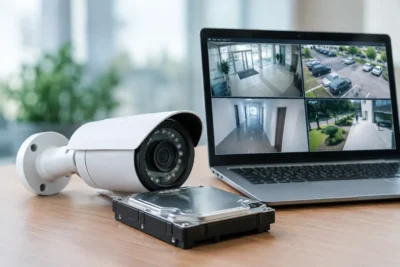
How to Secure Parking Areas Without Blind Spots
[yasr_overall_rating]
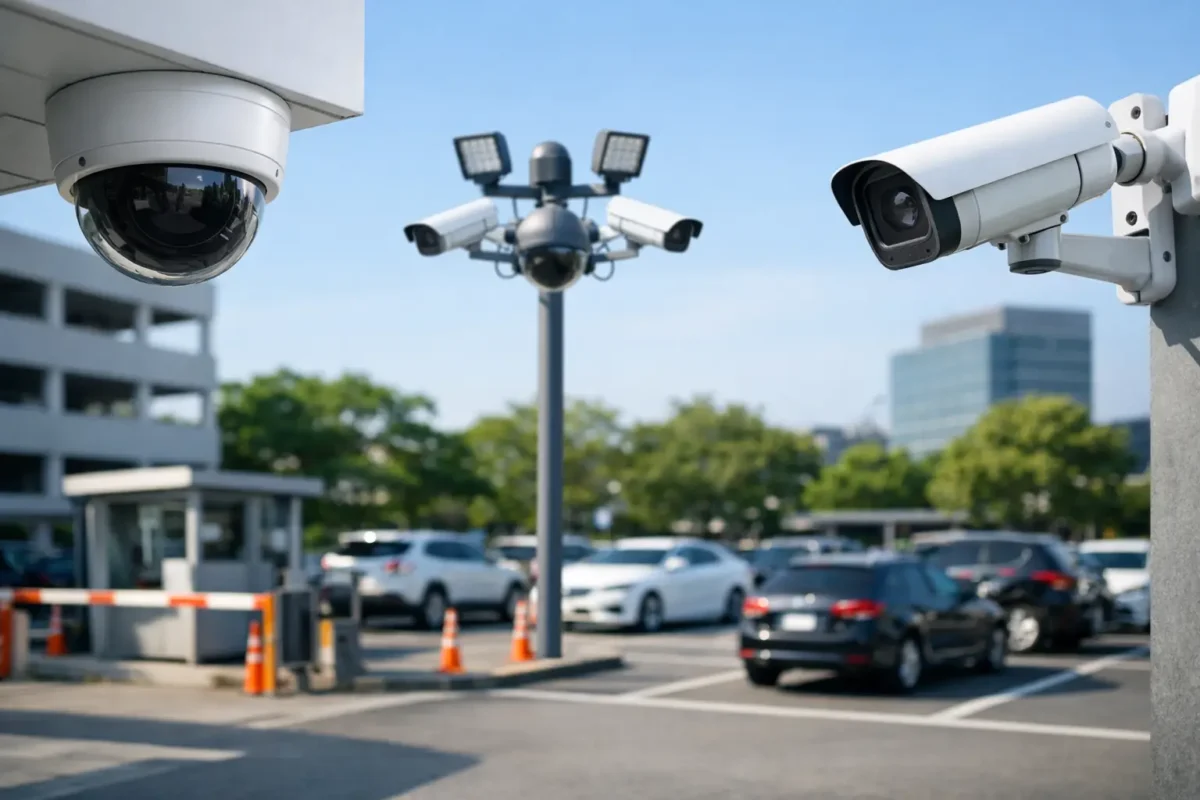
A parking area can look quiet while creating major exposure for a property. Vehicle break-ins, catalytic converter theft, vandalism, unauthorized parking, slip-and-fall claims, and personal safety concerns often happen outside normal business hours or beyond the view of staff. Knowing how to secure parking areas starts with treating the lot as part of the facility, not as an unmonitored space between the street and the front door.
For property owners and facility managers, the goal is not simply to add cameras. A security system must deter bad behavior, document incidents clearly, help staff respond quickly, and keep working through changing weather, low light, and busy daily operations.
Start With a Site-Specific Risk Assessment
Every parking lot has different weak points. A small retail storefront may need coverage for a few customer spaces and a rear service lane. A daycare may need clear visibility of pickup zones and pedestrian walkways. A construction site may need to protect equipment, material storage, and temporary gates after crews leave. Larger apartment, office, and multi-tenant properties may need a plan for several entrances, shared access roads, and remote corners.
Walk the property at the times incidents are most likely to occur, including after dark. Look for areas where a person can approach vehicles without being seen, drive out without passing a camera, or hide behind dumpsters, landscaping, stairwells, and utility structures. Pay attention to where vehicles enter, exit, turn around, and park outside designated spaces.
This assessment should also identify operational needs. Ask who will review footage, whether staff need live views from a phone or office monitor, and how quickly the team needs usable video after an incident. A system designed around those answers will be more effective than a standard camera package placed wherever power happens to be available.
How to Secure Parking Areas With Camera Coverage
Visible, business-grade surveillance is one of the strongest deterrents in a parking area, but only when camera placement and image quality support the job. A wide-angle camera can show activity across a lot, yet it may not provide enough detail to identify a face, vehicle, or license plate at a distance. That is why parking security often requires more than one camera type.
Fixed bullet or dome cameras work well for entrances, walkways, parking rows, payment kiosks, and building-side coverage. Panoramic or fisheye cameras can provide broad situational awareness over open areas. PTZ cameras can help security personnel investigate active activity across a large property, although they should not replace fixed cameras that continuously record critical zones.
License plate recognition cameras are useful at controlled entry and exit points, where vehicle speed, angle, lighting, and distance can be managed. They are not a catch-all solution for every space in the lot. A plate camera pointed at a wide driveway with fast-moving traffic may produce poor results if it is not designed and installed for that exact scene.
Camera height, lens selection, field of view, and lighting must work together. A camera mounted too high may capture a broad view but leave faces unusable. One mounted too low may be easier to tamper with. Professional system design balances coverage with identification, while avoiding the common mistake of creating a clear view of a car roof but not the person beside it.
Eliminate Blind Spots With Lighting and Clean Sightlines
Cameras cannot compensate for a dark lot. Consistent lighting improves deterrence, makes visitors feel safer, and gives cameras the information they need to capture useful images. Focus on parking rows, pedestrian routes, entry gates, dumpster areas, stairwells, loading zones, and the transition between the lot and the building.
Lighting should be even rather than concentrated in a few bright pools. Excessive contrast can leave people and vehicles in deep shadow, especially near entrances or under canopies. Motion-activated lighting can be useful in low-traffic zones, but a property with regular nighttime activity may benefit more from steady illumination.
Keep landscaping trimmed below camera sightlines and remove objects that create hiding places near access points. Check signage, delivery containers, parked trailers, and seasonal displays as well. A camera that was installed correctly can lose its view over time when the physical environment changes.
Control Who Can Enter and Where They Can Go
Parking security improves when a property creates clear boundaries. Gates, barrier arms, bollards, fencing, and controlled pedestrian access can reduce unauthorized vehicles and make it easier to investigate an incident. The right approach depends on how the lot is used.
A customer-facing retail lot generally needs convenient access and visible rules rather than a hard gate. An employee lot, apartment garage, fleet yard, or construction site may need credentialed access, visitor procedures, and scheduled gate operation. For high-value inventory or equipment, physical barriers should be paired with intrusion alarms that notify the right people when a gate, door, or protected zone is breached.
Do not overlook pedestrian movement. A secured vehicle gate does little if someone can walk through an open side entrance, access a rear door, or enter through an unprotected alley. Camera views, lighting, fencing, and access control should follow the same perimeter plan.
Make Signs, Rules, and Response Procedures Visible
Clear surveillance and parking policy signs support deterrence and reduce confusion. They can state that the property is monitored, identify towing rules where applicable, direct visitors to approved entrances, and establish expectations for after-hours access. Signs should be readable before drivers commit to entering a restricted area.
Just as important, staff need a practical response procedure. Decide who receives alarm notifications, who can access live video, when to contact law enforcement, and how to preserve footage after an incident. If employees are unsure which camera recorded an event or how to export video, the value of the system drops when it matters most.
Set recording retention based on the property’s risk level and operating cycle. A busy commercial lot may need longer retention than a small office with limited after-hours activity. Higher resolution video and longer retention require more storage, so this is a design decision that should be made upfront rather than discovered after a critical clip has already been overwritten.
Use Analytics Carefully and Verify Alerts
AI-enabled cameras can help teams focus on meaningful activity by distinguishing people and vehicles from motion caused by rain, shadows, trees, or headlights. Virtual tripwires and intrusion zones can be useful near gates, building entrances, equipment yards, and no-parking areas. They can also support faster review when a manager needs to find a specific event.
Analytics need careful setup. If an alert zone includes a public sidewalk, busy roadway, or frequently used loading area, staff may receive constant notifications and start ignoring them. The best configuration is narrow, tested, and tied to a clear response. A nighttime person-detection alert at a closed equipment yard has more value than a broad motion alert every time a car passes nearby.
For properties that need active oversight, remote viewing and professional monitoring options should be considered as part of the operating plan. Technology can provide visibility, but someone still needs defined responsibility for acting on what it shows.
Protect the System Itself
A parking lot system is only as dependable as its network, power, and installation quality. Outdoor cameras need weather-rated housings, protected cable runs, proper grounding where required, and secure mounting that resists tampering. Wireless connections can be appropriate for difficult locations, but they should be planned for signal strength, bandwidth, and reliability rather than used as a shortcut.
Use secure passwords, restricted user access, current firmware, and a protected recording system. Separate security devices from general guest networks when possible. For sites that cannot afford to lose coverage during an outage, backup power and cellular connectivity can keep critical cameras and alerts available.
Periodic maintenance matters. Review camera views after storms, construction work, landscaping changes, and lighting upgrades. Clean lenses, confirm timestamps, test alerts, and verify that recordings can be retrieved. A camera system is not a one-time purchase. It is an operational asset that needs occasional attention to remain useful.
Build the Plan Around Real Incidents, Not Product Specs
The best parking security design begins with the question, “What do we need to see, deter, and respond to?” That question leads to the right mix of cameras, lighting, access control, alarms, and recording capacity. It also prevents overspending on features that do not match the property’s actual risks.
Tech Security USA helps property owners and managers select business-grade parking lot security systems designed and installed correctly for their site, from camera coverage and license plate capture to intrusion protection and ongoing support. A professional walkthrough can identify gaps that are easy to miss from a building floor plan or product page.
A well-secured parking area sends a clear message before an incident occurs: this property is visible, controlled, and maintained. That message protects more than vehicles. It helps customers, employees, residents, and visitors feel safer every time they step outside.
Posted on GoogleTrustindex verifies that the original source of the review is Google. I visited the Tech Security USA orange to install security cameras for my home. I found it a very professional company, with high quality products that were made me impressed. I recommend it to anyone who are looking a professional security cameras company in onrange city of Orange County CA.Posted on GoogleTrustindex verifies that the original source of the review is Google. “Edit (this review is not “spam” which the owner claims it is and the story is absolutely real however it was about 2 years ago and if I wasn’t shy back then(9th grade) or I wish I had done/said something about my dad and I being taken advantage of as it was a scam (quoted at around $150 but after having to wait 3weeks instead of 3 days for the guy to charge us $300 for a cheap screen that no longer had a haptic button or working Touch ID along with many white pressure dots along the edges). Do not go here. If you look at most of their 5-star reviews, they are older than 7 years. I went here recently to fix my iPad Air (3rd gen). The problem was the screen's backlight wouldn't work, so it would just show a black image. The technician said he could get it done for around $150 and in 2-3 days he would call us (my dad and I). After a week of waiting, we decided to call but to no avail. We went to the place to check up on the work done, if any. We got there and the iPad was in the exact same spot as the day we left it there. The guy told us it would be ready in about 4 days, no later, and that he would call us. We never got the call, so we went back after about another 3 days of waiting for a call (2 weeks now). After waiting, we went back to the store for the iPad, and it appeared to us as if he had just gotten started by breaking the screen to replace it. After another week, we came back and he pulled it out from a drawer saying something along the lines of, "I was about to call you guys." The screen was working, but it was clearly a cheap screen that was ordered online, and the Touch ID didn’t work anymore. The button was replaced with a non-haptic one. There are many white dots along the edges of the screen that look as if someone pressed their thumb down too hard for too long. The guy said with all the "extra" work done to it, the new total would be $300. When my dad and I looked at each other, we knew that wasn’t right, but I watched my dad grab his wallet and pay. I wish I had said something because we were taken advantage of, and after a week, the iPad's screen isn’t functioning properly as it feels unresponsive.Posted on GoogleTrustindex verifies that the original source of the review is Google. Will somebody please tell the owner to stop responding? She’s only validating the bad reviews.Posted on GoogleTrustindex verifies that the original source of the review is Google. Little messy inside but brought an old Moto Z2 Play in to finalize my failed battery self install. Done when promised, phone looked as good as new and works fine. I'm happy.Posted on GoogleTrustindex verifies that the original source of the review is Google. Garbage screen quality do not come here the screen is more different then a regular apple screen they use low quality screens the whole screen shattered and has black lines throughout it after a tiny drop with a screen protector.Posted on GoogleTrustindex verifies that the original source of the review is Google. I needed a battery replacement for my Huawei p10, the engineer fixed it in a few days (he had to order the battery) and it was reasonable priced, very good, thank youPosted on GoogleTrustindex verifies that the original source of the review is Google. Great location and employees. Really came through when I needed help. Recommend this place to anyone.Posted on GoogleTrustindex verifies that the original source of the review is Google. My go to place for any laptop and iPhone repairs. Also very friendly and experienced guy James.
Resent Posts
How to Design Jobsite Surveillance That Works
21 October 2026
Surveillance System Maintenance Guide for Uptime
19 October 2026
Table of Contents