
Same Day Security Service When Coverage Fails
[yasr_overall_rating]

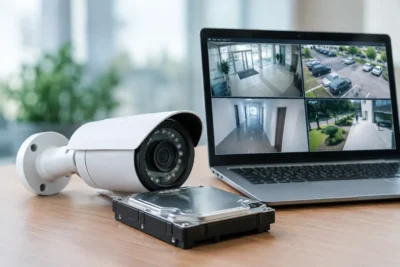
A camera that goes offline after a break-in, a failed recorder before a busy weekend, or an uncovered entry point at a newly opened location cannot wait for a routine appointment. Same day security service is built for the moments when a security gap becomes an immediate operational problem – and when the right response is more than simply replacing a camera.
For business owners, property managers, contractors, and homeowners, speed matters. But speed without proper diagnosis can create a second problem: equipment that is rushed into place, poorly aimed, disconnected from the network, or unable to provide usable evidence when it counts. The goal is fast restoration with business-grade workmanship.
What Same Day Security Service Should Cover
Same-day support can mean different things depending on the condition of the site, the equipment involved, and local technician availability. A serious service provider should begin by identifying the actual failure: power loss, network interruption, damaged cable, recorder failure, camera damage, storage issue, or an access problem with the monitoring app.
In many cases, the fastest fix is not a full replacement. A camera may be functional but offline because a PoE switch has failed, a connector has corroded, an IP address has changed, or a recorder hard drive is reporting errors. A trained technician can isolate the source of the issue and restore the system without replacing components that still have useful life.
When hardware is damaged or obsolete, same day security service should include a practical replacement path. That may involve installing a new bullet, dome, PTZ, or AI camera; replacing a failed NVR; correcting cabling; reconfiguring remote access; and confirming that recording is active before the job is closed. The work should be documented, and the customer should know exactly what was repaired, replaced, and tested.
Fast Response Is Not the Same as a Rushed Installation
A same-day visit is valuable because it reduces the time a property is exposed. It does not eliminate the need for proper system design. Camera placement, lighting conditions, field of view, recording retention, and network capacity still determine whether the system performs when an incident occurs.
Consider a smoke shop experiencing repeated after-hours theft. Replacing one damaged front-door camera may restore a view of the entrance, but it may not identify a suspect leaving through a side access point or capture a readable license plate in the parking area. The immediate repair should protect the property now, while the technician can also identify coverage gaps that need a planned upgrade.
The same principle applies to daycares. A camera at the front desk is useful, but a dependable system also needs controlled visibility at entrances, pickup areas, hallways, and playground access points. Coverage must respect the operation of the facility and be designed around clear, reliable video rather than a random collection of cameras.
For a construction site, the urgent need may be restoring a pole-mounted camera or LTE connection after equipment theft. The longer-term requirement is often stronger mounting, better cable protection, remote health monitoring, and camera placement that covers material staging areas, gates, and equipment access routes.
When to Request Same Day Security Service
The right time to request urgent support is when the failure affects safety, evidence collection, access control, or business continuity. If your system is no longer recording, your primary entrance or cash-handling area is uncovered, or a critical camera is down after an incident, waiting several days can leave a costly blind spot.
Property managers should also act quickly after vandalism, storm damage, power events, or attempted intrusion. Even when cameras appear online, a site should be checked if footage is missing, timestamps are incorrect, image quality has suddenly degraded, or remote users cannot access live video. These are often early warnings that storage, power, or network equipment needs attention.
For multi-site operators, a failed system at one location can become a process problem across the portfolio. Consistent equipment standards and clear support procedures make it easier to restore service quickly without guessing which recorder, camera model, credentials, or network settings are in place.
What to Have Ready Before a Technician Arrives
A fast dispatch starts with accurate information. Share the site address, the equipment affected, what changed before the failure, and whether the issue involves live viewing, recording, remote access, or physical damage. If there was an incident, preserve the available footage and avoid resetting the recorder until the evidence has been reviewed or exported.
Access is equally important. The technician may need entry to a network closet, electrical panel, roof area, storage room, or camera mounting location. For commercial properties, make sure an authorized employee can provide access and explain any site-specific safety requirements. At construction sites, this may include coordination with the superintendent and confirmation of lift or ladder access.
It also helps to identify the priority areas. A jewelry store may need immediate coverage at display cases, entry doors, and the safe area. A parking facility may prioritize gates, payment equipment, pedestrian walkways, and vehicle entry lanes. Clear priorities allow the response to focus first on the areas that create the most risk.
The Right Equipment Depends on the Problem
Not every security failure calls for the same camera or infrastructure. A high-visibility exterior entrance may need a weather-rated bullet camera with strong low-light performance. A retail floor may be better served by discreet dome cameras. Wide open interiors can benefit from panoramic or fisheye coverage, while vehicle-focused locations may require license plate recognition cameras positioned for the correct angle, speed, and lighting.
Network conditions matter just as much as the camera. A new high-resolution camera can strain an undersized switch, weak Wi-Fi connection, or overloaded recorder. Remote sites may need a properly configured LTE or 5G router. A recorder with insufficient storage may appear to work while retaining video for far fewer days than the owner expects.
This is where an end-to-end provider brings practical value. Tech Security USA can help customers identify the right hardware, coordinate professional installation, and verify that the finished system is designed and installed correctly for the property rather than treated as a one-size-fits-all replacement.
Questions to Ask Before Approving an Urgent Repair
Urgent service should still come with clear answers. Ask whether the existing equipment can be repaired safely, whether replacement parts are available that day, and whether the proposed fix restores recording as well as live viewing. Confirm who will test remote access, image quality, camera angles, and video playback after the work is complete.
It is also reasonable to ask about compatibility. Mixing older cameras, recorders, and networking hardware can create limitations in resolution, AI detection, mobile access, or warranty coverage. Sometimes the lowest immediate-cost repair is appropriate. Other times, a targeted upgrade prevents recurring service calls and provides much better evidence.
For commercial sites, ask for a recommendation on preventive maintenance after the urgent issue is resolved. Cleaning camera housings, checking hard-drive health, reviewing retention settings, testing backup power, and confirming remote user access can prevent the next outage from becoming another emergency.
Same Day Support That Protects the Next Shift
A security system earns its value during the hours when no one is standing in front of the monitor. That is why urgent service should finish with working cameras, confirmed recording, clear ownership of any follow-up work, and a plan that fits the property’s real risks.
If a critical camera, recorder, or connection has failed, treat it as an operational issue rather than a minor technical inconvenience. A prompt on-site assessment can restore coverage now and give you a clearer path to a system that will hold up through the next incident, the next busy shift, and the next change at your property.
Posted on GoogleTrustindex verifies that the original source of the review is Google. I visited the Tech Security USA orange to install security cameras for my home. I found it a very professional company, with high quality products that were made me impressed. I recommend it to anyone who are looking a professional security cameras company in onrange city of Orange County CA.Posted on GoogleTrustindex verifies that the original source of the review is Google. “Edit (this review is not “spam” which the owner claims it is and the story is absolutely real however it was about 2 years ago and if I wasn’t shy back then(9th grade) or I wish I had done/said something about my dad and I being taken advantage of as it was a scam (quoted at around $150 but after having to wait 3weeks instead of 3 days for the guy to charge us $300 for a cheap screen that no longer had a haptic button or working Touch ID along with many white pressure dots along the edges). Do not go here. If you look at most of their 5-star reviews, they are older than 7 years. I went here recently to fix my iPad Air (3rd gen). The problem was the screen's backlight wouldn't work, so it would just show a black image. The technician said he could get it done for around $150 and in 2-3 days he would call us (my dad and I). After a week of waiting, we decided to call but to no avail. We went to the place to check up on the work done, if any. We got there and the iPad was in the exact same spot as the day we left it there. The guy told us it would be ready in about 4 days, no later, and that he would call us. We never got the call, so we went back after about another 3 days of waiting for a call (2 weeks now). After waiting, we went back to the store for the iPad, and it appeared to us as if he had just gotten started by breaking the screen to replace it. After another week, we came back and he pulled it out from a drawer saying something along the lines of, "I was about to call you guys." The screen was working, but it was clearly a cheap screen that was ordered online, and the Touch ID didn’t work anymore. The button was replaced with a non-haptic one. There are many white dots along the edges of the screen that look as if someone pressed their thumb down too hard for too long. The guy said with all the "extra" work done to it, the new total would be $300. When my dad and I looked at each other, we knew that wasn’t right, but I watched my dad grab his wallet and pay. I wish I had said something because we were taken advantage of, and after a week, the iPad's screen isn’t functioning properly as it feels unresponsive.Posted on GoogleTrustindex verifies that the original source of the review is Google. Will somebody please tell the owner to stop responding? She’s only validating the bad reviews.Posted on GoogleTrustindex verifies that the original source of the review is Google. Little messy inside but brought an old Moto Z2 Play in to finalize my failed battery self install. Done when promised, phone looked as good as new and works fine. I'm happy.Posted on GoogleTrustindex verifies that the original source of the review is Google. Garbage screen quality do not come here the screen is more different then a regular apple screen they use low quality screens the whole screen shattered and has black lines throughout it after a tiny drop with a screen protector.Posted on GoogleTrustindex verifies that the original source of the review is Google. I needed a battery replacement for my Huawei p10, the engineer fixed it in a few days (he had to order the battery) and it was reasonable priced, very good, thank youPosted on GoogleTrustindex verifies that the original source of the review is Google. Great location and employees. Really came through when I needed help. Recommend this place to anyone.Posted on GoogleTrustindex verifies that the original source of the review is Google. My go to place for any laptop and iPhone repairs. Also very friendly and experienced guy James.
Resent Posts
How to Design Jobsite Surveillance That Works
21 October 2026
Surveillance System Maintenance Guide for Uptime
19 October 2026
Table of Contents