
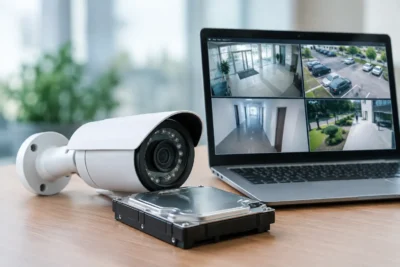
Security Camera Financing for Better Protection
[yasr_overall_rating]
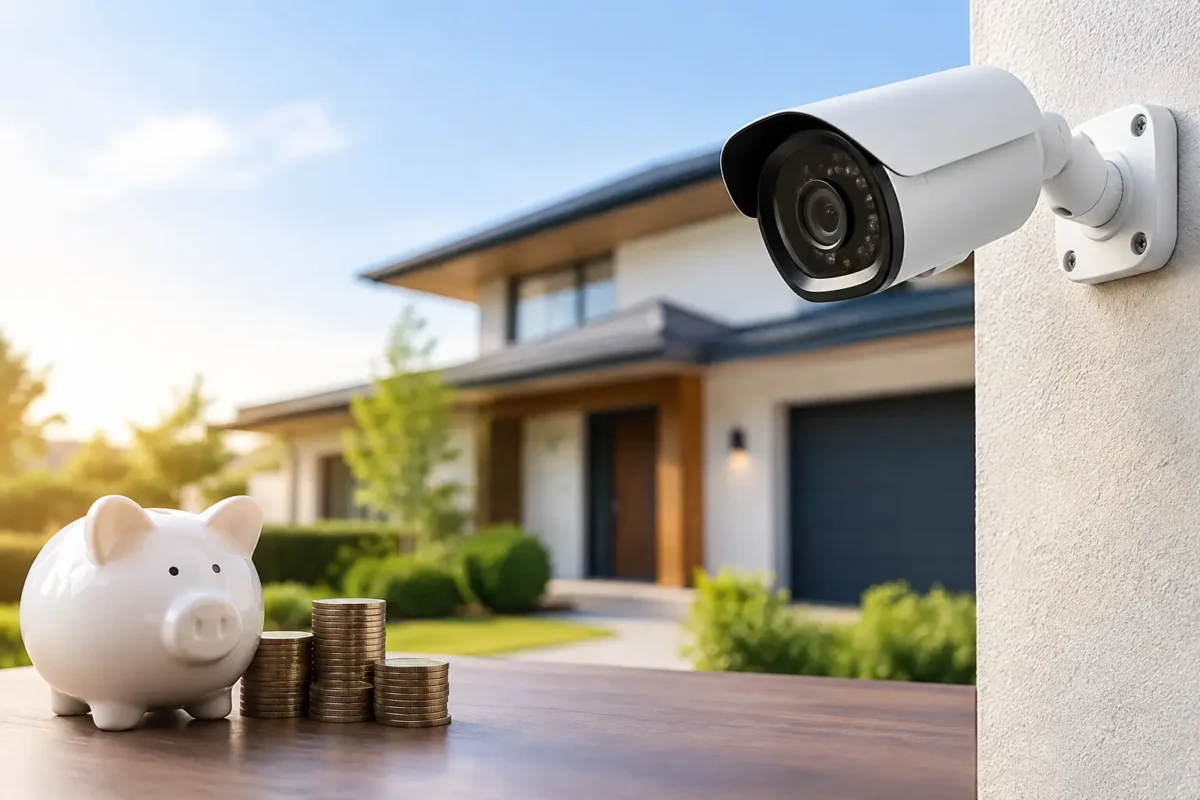
A break-in, liability claim, or missing delivery rarely arrives when the budget happens to have room for a full surveillance upgrade. Security camera financing can help property owners put the right system in place sooner, without cutting critical corners on coverage, recording, installation, or support.
For a daycare, jewelry store, smoke shop, parking lot, construction site, or multi-location business, the goal is not simply to get cameras on the wall. The system needs to capture usable evidence, cover the right risks, withstand the environment, and remain dependable after installation. Financing can be a practical way to match that investment to the operating budget while protecting the property now.
When Security Camera Financing Makes Sense
Financing is most useful when delaying the project creates a real operational risk. A retail owner may need clearer views of registers, entrances, and high-value inventory after repeated shrink incidents. A contractor may need job-site cameras and cellular connectivity before equipment arrives. A property manager may need coverage at a parking area after vehicle damage or tenant complaints.
In these situations, paying cash may still be the right choice if the budget is available and the project is straightforward. But using available cash for a security project can leave less room for payroll, inventory, repairs, or seasonal expenses. A structured payment plan may allow a business to install a properly designed system without draining working capital.
For homeowners, financing can be useful when several components are needed at once: exterior cameras, a video recorder, storage drives, network upgrades, professional installation, and possibly intrusion or life safety equipment. Buying one low-cost camera at a time often creates a patchwork system with inconsistent coverage and no clear support path.
Finance the System You Actually Need
The lowest monthly payment is not always the lowest project cost. Before considering any financing option, define the system scope. A security provider should help determine what the property needs based on its layout, risks, lighting, network conditions, and recording requirements.
A small storefront may need a few fixed turret or dome cameras, a recorder, and coverage at the register and rear entrance. A larger parking facility may need long-range cameras, license plate recognition, poles or mounting hardware, trenching, and a network plan. A construction site may require rugged cameras, remote access, solar or LTE/5G connectivity, and a plan for moving equipment as the job progresses.
These details affect the total investment. They also determine whether the system will produce usable video when an incident occurs. A camera aimed too high, placed in poor lighting, or connected to an undersized recorder may look acceptable on installation day and fail when footage is needed most.
A complete financed project can include hardware, design, installation labor, configuration, training, and applicable support coverage. Ask what is included in the quoted amount so there is no confusion between the camera price and the finished, operating system.
Do Not Reduce Coverage to Meet a Payment Target
It is reasonable to adjust a project to fit a budget. The better approach is to prioritize coverage by risk rather than remove the parts that make the system effective.
Start with entrances, cash-handling areas, high-value inventory, loading areas, vehicle gates, and blind spots. Then consider a phased plan for lower-priority spaces. This is often better than installing cameras everywhere with poor image quality, insufficient storage, or no professional configuration.
For example, a jewelry store may begin with high-resolution interior coverage, exterior entry views, and monitored alarm protection, then expand to additional perimeter cameras later. A warehouse may prioritize dock doors and shipping lanes before adding broad overview coverage across the full yard.
Compare Security Camera Financing Terms Carefully
Financing programs vary by lender, borrower profile, project value, and whether the purchase is personal or commercial. Approval, rates, payment schedules, and eligibility are determined by the financing provider. Do not assume that a promotional offer, deferred payment period, or low stated monthly payment means the total cost is lower.
Review the full terms before signing. Pay attention to the amount financed, annual percentage rate, term length, payment due date, late-payment policy, prepayment terms, and any fees. A longer term may make the monthly payment easier to manage, but it can increase the total amount paid over time.
For businesses, also confirm who is applying and who is responsible for repayment. Some options may evaluate the business, while others may require a personal guarantee. A new company, a sole proprietor, and an established multi-site operator may not be offered the same terms.
It also helps to compare financing against the cost of waiting. If theft, vandalism, false claims, or recurring damage has already created losses, the financial impact of postponing a properly designed system may exceed the cost of monthly payments.
Build the Payment Around Long-Term Performance
A camera system is not a one-time wall decoration. It is part of how a property documents activity, investigates incidents, manages access, and protects people and assets. The equipment should be selected for the job, not just for the day it is purchased.
That means asking practical questions before committing to a payment plan. How many days of footage must be retained? Will cameras need night vision or supplemental lighting? Does the site have reliable internet and network capacity? Is remote viewing needed for managers or owners? Will the system need to expand next year? Who will provide service if a recorder fails or a camera loses connection?
Storage planning deserves special attention. Higher-resolution cameras, more cameras, and continuous recording can require significantly more storage. Short retention periods may save money initially but can create a problem when an incident is reported weeks later. For regulated environments or locations with frequent disputes, the right retention period is often worth the added investment.
Professional installation can also protect the value of the financed system. Proper cable routing, weatherproofing, camera placement, recorder configuration, and user training help prevent avoidable downtime. A system that is poorly installed may still generate a monthly payment, but it will not deliver the evidence or visibility the property needs.
A Practical Approval and Installation Process
The process should begin with a clear assessment of the property, not a generic camera bundle. Share the site type, priority areas, existing equipment, timeline, and any known incidents or concerns. Photos, floor plans, and a walkthrough can help identify coverage gaps before equipment is selected.
Next, request a detailed scope that separates equipment, installation, and any optional services. This makes it easier to understand what is being financed and where adjustments can be made if the payment target needs to change. It also prevents a common mistake: comparing a hardware-only quote against a complete installed system.
Once a financing path is selected, schedule the work around business operations. Retailers may need installation outside peak hours. Daycares need careful planning around access, privacy, and child safety. Active construction sites require coordination with site supervisors, power availability, and changing work zones.
After installation, test the system under real conditions. Review daytime and nighttime video, confirm remote access permissions, verify recording and playback, and make sure staff know how to export footage when needed. Training is not an extra detail. It determines whether a manager can respond quickly when a customer dispute, break-in, or safety event occurs.
Why One-Stop Support Matters
Security projects often involve more than cameras. The property may need an upgraded network switch, secure cabling, a stronger recorder, an LTE/5G router, alarm equipment, or new mounting infrastructure. Coordinating several vendors can create delays and leave no single party accountable for the finished result.
Tech Security USA helps customers approach security as a complete installed solution, with business-grade equipment, system design guidance, installation coordination, and ongoing support. That approach is especially valuable when financing is involved because the project should be designed and installed correctly the first time.
Before applying for security camera financing, establish the risks you need to address, the footage you need to retain, and the monthly payment your operation can comfortably support. A clear scope and a dependable service partner make it easier to invest with confidence and put protection in place when it is needed.
Posted on GoogleTrustindex verifies that the original source of the review is Google. I visited the Tech Security USA orange to install security cameras for my home. I found it a very professional company, with high quality products that were made me impressed. I recommend it to anyone who are looking a professional security cameras company in onrange city of Orange County CA.Posted on GoogleTrustindex verifies that the original source of the review is Google. “Edit (this review is not “spam” which the owner claims it is and the story is absolutely real however it was about 2 years ago and if I wasn’t shy back then(9th grade) or I wish I had done/said something about my dad and I being taken advantage of as it was a scam (quoted at around $150 but after having to wait 3weeks instead of 3 days for the guy to charge us $300 for a cheap screen that no longer had a haptic button or working Touch ID along with many white pressure dots along the edges). Do not go here. If you look at most of their 5-star reviews, they are older than 7 years. I went here recently to fix my iPad Air (3rd gen). The problem was the screen's backlight wouldn't work, so it would just show a black image. The technician said he could get it done for around $150 and in 2-3 days he would call us (my dad and I). After a week of waiting, we decided to call but to no avail. We went to the place to check up on the work done, if any. We got there and the iPad was in the exact same spot as the day we left it there. The guy told us it would be ready in about 4 days, no later, and that he would call us. We never got the call, so we went back after about another 3 days of waiting for a call (2 weeks now). After waiting, we went back to the store for the iPad, and it appeared to us as if he had just gotten started by breaking the screen to replace it. After another week, we came back and he pulled it out from a drawer saying something along the lines of, "I was about to call you guys." The screen was working, but it was clearly a cheap screen that was ordered online, and the Touch ID didn’t work anymore. The button was replaced with a non-haptic one. There are many white dots along the edges of the screen that look as if someone pressed their thumb down too hard for too long. The guy said with all the "extra" work done to it, the new total would be $300. When my dad and I looked at each other, we knew that wasn’t right, but I watched my dad grab his wallet and pay. I wish I had said something because we were taken advantage of, and after a week, the iPad's screen isn’t functioning properly as it feels unresponsive.Posted on GoogleTrustindex verifies that the original source of the review is Google. Will somebody please tell the owner to stop responding? She’s only validating the bad reviews.Posted on GoogleTrustindex verifies that the original source of the review is Google. Little messy inside but brought an old Moto Z2 Play in to finalize my failed battery self install. Done when promised, phone looked as good as new and works fine. I'm happy.Posted on GoogleTrustindex verifies that the original source of the review is Google. Garbage screen quality do not come here the screen is more different then a regular apple screen they use low quality screens the whole screen shattered and has black lines throughout it after a tiny drop with a screen protector.Posted on GoogleTrustindex verifies that the original source of the review is Google. I needed a battery replacement for my Huawei p10, the engineer fixed it in a few days (he had to order the battery) and it was reasonable priced, very good, thank youPosted on GoogleTrustindex verifies that the original source of the review is Google. Great location and employees. Really came through when I needed help. Recommend this place to anyone.Posted on GoogleTrustindex verifies that the original source of the review is Google. My go to place for any laptop and iPhone repairs. Also very friendly and experienced guy James.
Resent Posts
How to Design Jobsite Surveillance That Works
21 October 2026
Surveillance System Maintenance Guide for Uptime
19 October 2026
Table of Contents