
Backup Internet for Surveillance Systems at Work
[yasr_overall_rating]

A camera system can be powered, aimed correctly, and recording in high resolution, yet still leave you blind at the worst possible moment when the primary internet connection fails. For businesses that rely on remote viewing, off-site notifications, cloud access, or centrally managed locations, backup internet for surveillance systems is not an optional add-on. It is part of the security plan.
A construction-site trailer with no connection can miss a theft alert. A parking facility manager may lose remote visibility during a service outage. A daycare owner might still have cameras recording locally but cannot check live video from home or provide timely access when needed. The right backup connection keeps the network available when the wired service goes down, without forcing staff to improvise under pressure.
What Backup Internet Actually Protects
Backup internet does not replace the camera recorder. It protects the connection between your security system and the people or services that need access to it. That distinction matters when selecting equipment and setting expectations.
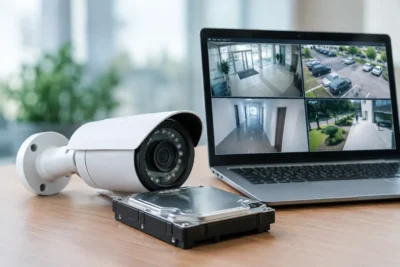
Most professional camera systems continue recording to an NVR or local storage device during an internet outage, provided the cameras, PoE switch, recorder, and local network still have power. Footage is not necessarily lost just because the cable provider has an outage. What is lost is remote access, cloud upload, mobile alerts, remote management, and in some cases communication with a monitoring center.
A properly configured secondary connection steps in when the primary provider fails. The router moves camera traffic, remote viewing requests, and essential business traffic to a cellular connection or another wired circuit. For a business with multiple locations, that can mean the difference between a temporary inconvenience and a security gap nobody discovers until after an incident.
Backup Internet for Surveillance Systems Starts With the Failure Point
The best solution depends on why your connection could fail. A simple cable outage, a damaged fiber line, a router failure, a power outage, and intentional tampering require different layers of protection. Installing a cellular router without addressing power, for example, may not help if the entire network shuts down with the building electricity.
For many small businesses, an LTE or 5G router with automatic failover is the practical choice. It connects to a cellular carrier and monitors the primary internet service. If the main connection stops responding, the router switches to cellular service. Once the main connection is stable again, it returns traffic to the preferred wired connection.
This approach works especially well for retail stores, smoke shops, jewelry stores, small offices, parking lots, and temporary job sites. It can also serve as the primary connection where traditional wired service is unavailable or unreliable. A construction site may need a cellular-first design from the start, while an established facility may use cellular only for failover.
A second wired provider can be a better fit for larger facilities with many cameras, frequent remote users, or high cloud-upload requirements. It usually offers greater sustained capacity than cellular service, but it is only true redundancy if it does not share the same vulnerable path. Two services delivered over the same building entry, pole route, or neighborhood infrastructure can fail together.
Do Not Confuse Internet Failover With Power Backup
Internet redundancy and power backup solve separate problems. If utility power fails, the modem, router, network switch, cameras, and recorder need backup power to stay online. A UPS can keep a small system running through a brief outage, while a larger commercial site may require generator-backed circuits.
The cellular router also needs UPS power, and it needs a usable signal. This is why placement and testing matter. A router placed in a metal electrical room, basement, or enclosed cabinet may have weak cellular reception even when a phone works outside. External antennas, proper mounting, and a site survey can make the difference between a reliable failover connection and an expensive device that cannot carry traffic when needed.
Match Bandwidth to the Cameras and the Job
Not every camera stream belongs on a cellular backup connection. High-resolution cameras, multi-sensor panoramas, PTZ cameras, and large systems can consume substantial bandwidth when multiple users view live video or when footage uploads to the cloud. Cellular plans also have data thresholds, speed changes, and variable performance based on local network conditions.
The operational goal during an outage should be continuity, not necessarily full normal operation. A good design prioritizes what must remain available: the recorder, selected critical cameras, remote access for authorized staff, intrusion or life-safety communications, and event notifications. Less critical traffic can be restricted until the primary service returns.
For example, a jewelry store may prioritize front entry, showcase, register, and rear-door cameras. A parking operator may prioritize entrances, exits, payment areas, and license plate recognition cameras. At a job site, the priority may be the gate, equipment yard, fuel storage, and trailer entry. This keeps bandwidth focused on the areas that matter most during a disruption.
Camera settings may also need adjustment for failover use. Lowering remote substream resolution, limiting the number of simultaneous viewers, and using event-based uploads can reduce cellular consumption without changing the high-quality footage stored locally on the NVR. These settings should be planned during installation, not changed hurriedly after an outage begins.
The Network Design Details That Matter
A backup connection needs more than a SIM card and a router. The surveillance network must be designed so the router can detect a real service failure, transfer traffic correctly, and preserve secure remote access. Some internet failures leave the modem technically connected while traffic cannot reach the outside world. Better routers test external connectivity rather than simply checking whether a cable is plugged in.
Remote access also deserves attention. Cellular providers commonly use carrier-grade NAT, which can complicate direct inbound connections to a recorder. Business-grade router configuration, secure remote access methods, and compatible camera platform settings help avoid the common problem of having cellular service but no usable remote video.
Network segmentation is another practical safeguard. Cameras, recorders, office computers, guest Wi-Fi, access control, and alarms should not all compete on one unmanaged network. Separating critical security equipment helps preserve performance and reduces exposure if another device has a problem. For high-risk locations, locked network cabinets and protected cable routes help prevent a burglar from disabling the connection inside the building.
When Cellular Backup Is Not Enough
Cellular failover is highly effective, but it has limits. A warehouse with dozens of 4K cameras, constant cloud recording, and several remote operators may need a second wired circuit, a larger data plan, or a mixed design. A remote mountain property may have poor coverage from one carrier and better coverage from another. Dense urban locations can experience congestion during major events or emergencies.
The answer is not to buy the highest-priced router without a plan. It is to test coverage at the exact install location, estimate video and alarm traffic, identify the critical devices, and select equipment that can support the required number of connections. In some cases, dual-SIM or dual-carrier capability is worth the added cost because it reduces reliance on a single cellular network.
For a residential system, the requirements are usually simpler. A homeowner may only need notifications, access to a few cameras, and the ability to check the driveway or front door during an outage. For commercial locations, the need often extends to staff access, incident response, alarm integration, and maintaining visibility across multiple sites. The design should reflect that difference.
Installation and Testing Should Be Part of the Purchase
A failover system that has never been tested is an assumption, not a backup plan. After installation, disconnect or disable the primary connection in a controlled test. Confirm that the router transfers to cellular service, authorized users can reach the recorder, selected live feeds load, notifications arrive, and the system returns to normal after the main connection is restored.
Testing should also verify power backup runtime and cellular signal strength under load. It is useful to document the router location, SIM carrier, account contact, network settings, and expected failover behavior for the manager responsible for the site. This saves time when personnel change or a real outage happens after hours.
Tech Security USA can design a business-grade surveillance and backup connectivity plan around the cameras, recorder, site layout, and operational priorities already in place. The goal is not to add equipment for its own sake. It is to keep the cameras you depend on reachable when your primary connection is not.
Before the next internet outage tests your security system for you, identify which cameras, alerts, and users must stay online. That short conversation will point to the right router, data plan, power backup, and installation approach for your property.
Posted on GoogleTrustindex verifies that the original source of the review is Google. I visited the Tech Security USA orange to install security cameras for my home. I found it a very professional company, with high quality products that were made me impressed. I recommend it to anyone who are looking a professional security cameras company in onrange city of Orange County CA.Posted on GoogleTrustindex verifies that the original source of the review is Google. “Edit (this review is not “spam” which the owner claims it is and the story is absolutely real however it was about 2 years ago and if I wasn’t shy back then(9th grade) or I wish I had done/said something about my dad and I being taken advantage of as it was a scam (quoted at around $150 but after having to wait 3weeks instead of 3 days for the guy to charge us $300 for a cheap screen that no longer had a haptic button or working Touch ID along with many white pressure dots along the edges). Do not go here. If you look at most of their 5-star reviews, they are older than 7 years. I went here recently to fix my iPad Air (3rd gen). The problem was the screen's backlight wouldn't work, so it would just show a black image. The technician said he could get it done for around $150 and in 2-3 days he would call us (my dad and I). After a week of waiting, we decided to call but to no avail. We went to the place to check up on the work done, if any. We got there and the iPad was in the exact same spot as the day we left it there. The guy told us it would be ready in about 4 days, no later, and that he would call us. We never got the call, so we went back after about another 3 days of waiting for a call (2 weeks now). After waiting, we went back to the store for the iPad, and it appeared to us as if he had just gotten started by breaking the screen to replace it. After another week, we came back and he pulled it out from a drawer saying something along the lines of, "I was about to call you guys." The screen was working, but it was clearly a cheap screen that was ordered online, and the Touch ID didn’t work anymore. The button was replaced with a non-haptic one. There are many white dots along the edges of the screen that look as if someone pressed their thumb down too hard for too long. The guy said with all the "extra" work done to it, the new total would be $300. When my dad and I looked at each other, we knew that wasn’t right, but I watched my dad grab his wallet and pay. I wish I had said something because we were taken advantage of, and after a week, the iPad's screen isn’t functioning properly as it feels unresponsive.Posted on GoogleTrustindex verifies that the original source of the review is Google. Will somebody please tell the owner to stop responding? She’s only validating the bad reviews.Posted on GoogleTrustindex verifies that the original source of the review is Google. Little messy inside but brought an old Moto Z2 Play in to finalize my failed battery self install. Done when promised, phone looked as good as new and works fine. I'm happy.Posted on GoogleTrustindex verifies that the original source of the review is Google. Garbage screen quality do not come here the screen is more different then a regular apple screen they use low quality screens the whole screen shattered and has black lines throughout it after a tiny drop with a screen protector.Posted on GoogleTrustindex verifies that the original source of the review is Google. I needed a battery replacement for my Huawei p10, the engineer fixed it in a few days (he had to order the battery) and it was reasonable priced, very good, thank youPosted on GoogleTrustindex verifies that the original source of the review is Google. Great location and employees. Really came through when I needed help. Recommend this place to anyone.Posted on GoogleTrustindex verifies that the original source of the review is Google. My go to place for any laptop and iPhone repairs. Also very friendly and experienced guy James.
Resent Posts
How to Design Jobsite Surveillance That Works
21 October 2026
Surveillance System Maintenance Guide for Uptime
19 October 2026
Table of Contents