
Smoke Shop Security Cameras That Work
[yasr_overall_rating]
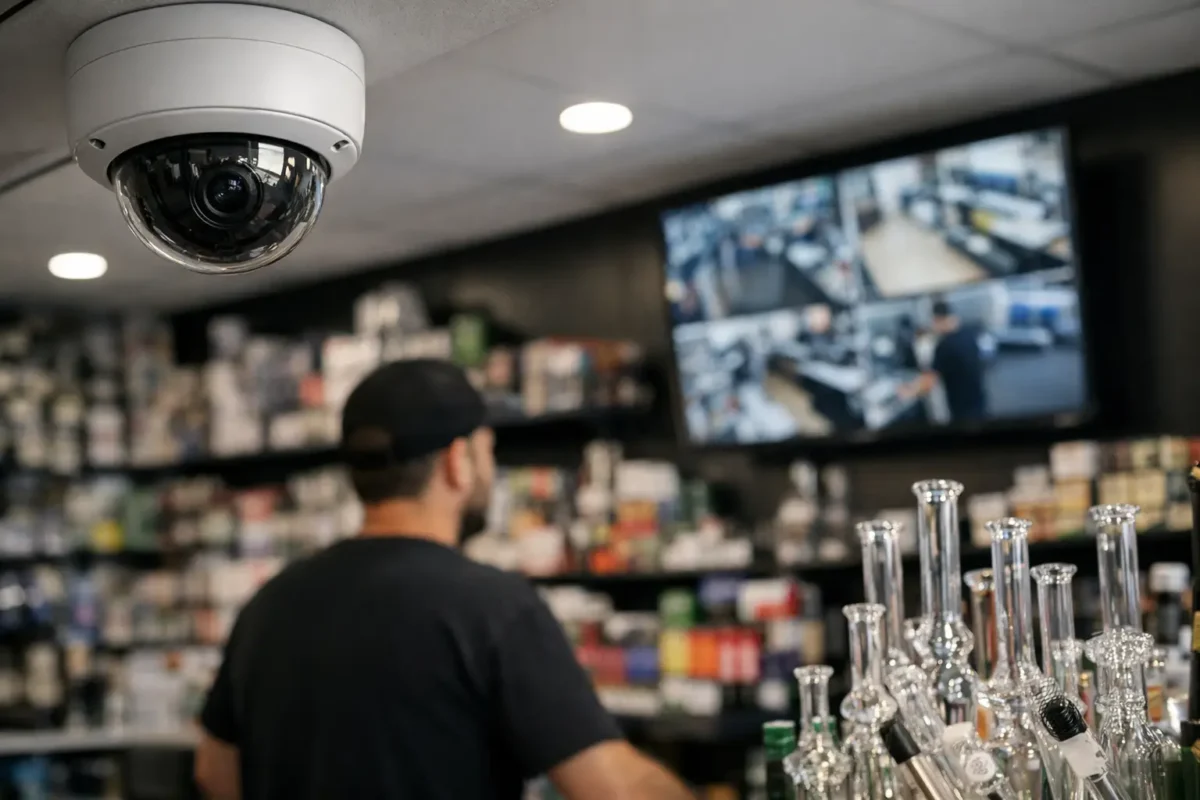
A smoke shop can look calm one minute and turn into a high-risk environment the next. High-value inventory, frequent cash handling, age-restricted sales, and extended hours create a different security profile than a typical retail store. That is why smoke shop security cameras need to do more than record video. They need to deter theft, document transactions clearly, and give owners a reliable way to review incidents without guessing what happened.
For most smoke shops, the real problem is not whether to install cameras. It is whether the system is designed correctly for the floor plan, the blind spots, the lighting conditions, and the operational risks at the counter. A cheap kit may cover the room, but it often fails where it matters most – facial detail at the register, clear views of product displays, and dependable recording when an incident actually happens.
What smoke shop security cameras need to cover
Smoke shops deal with a mix of internal and external risk. Shoplifting is obvious, but it is only one part of the picture. Disputes at the register, after-hours break-ins, employee cash handling concerns, loitering near entrances, and parking lot activity all matter. A camera system has to be built around how the store runs, not just around how many walls need to be watched.
At minimum, most stores need clean coverage of the main entrance, every register position, high-value display cases, sales floor aisles, stockroom access points, and the exterior front approach. If the store shares parking or sees repeat loitering after dark, outside coverage becomes just as important as the interior. In some locations, a wide overview camera is useful for context, but it should never replace cameras positioned for identification.
This is where many installations go wrong. Owners assume one wide-angle camera can do everything. It cannot. A broad field of view helps with awareness, but the farther the subject is from the lens, the less usable that image becomes for identifying a face, reading a transaction movement, or documenting concealment of merchandise.
The right camera mix for a smoke shop
The best smoke shop security cameras are usually a combination of fixed dome or turret cameras, a few tightly positioned identification cameras, and in some cases a PTZ or panoramic camera for broader situational coverage. The right mix depends on store size, shelf height, window glare, and whether the operation includes multiple counters or restricted back-room areas.
Turret and dome cameras are commonly the most practical interior choice. They provide a clean appearance, strong image quality, and reliable positioning over registers, aisles, and product walls. Bullet cameras often make more sense outdoors where visible deterrence matters and longer-range views are needed. If the store has a parking lot, alley exposure, or side entrance, exterior bullets can create stronger coverage than indoor-style cameras pushed into an outdoor role.
PTZ cameras are useful in larger stores or for properties with broad exterior views, but they are not a replacement for fixed coverage. A PTZ can follow activity, yet it only looks in one direction at a time. For a smoke shop, fixed cameras should always handle the critical evidence areas first. Panoramic or fisheye cameras can help cover open floor plans, though they are best used with proper mounting height and image correction. Without that, they create awareness but not enough detail.
Why image quality matters at the register
The register is where many of the most expensive problems happen. Refund disputes, short-cash questions, failed age-verification claims, and confrontation with customers all depend on clear video. This is one area where resolution, frame rate, and camera placement matter more than marketing labels.
A camera pointed generally toward the counter is not the same as a camera designed to capture a usable angle on hands, faces, money exchange, and the point-of-sale area. If the lens is too wide, details get lost. If it is mounted too high, hats and hoodies block faces. If backlighting from storefront windows is not handled correctly, the subject turns into a silhouette.
Business-grade cameras with strong low-light performance and wide dynamic range solve a lot of these issues. They help the system balance bright sunlight at the front windows with darker interior shelves. That is especially important for smoke shops with glass storefronts, neon lighting, or long operating hours that stretch from daytime glare into nighttime shadows.
Deterrence and evidence both matter
Some owners want highly visible cameras to make people think twice before stealing. Others prefer a cleaner look that does not overwhelm the store visually. Both approaches can work, and the right answer depends on the location.
Visible exterior cameras, paired with proper placement, often reduce opportunistic theft and discourage loitering. Inside the store, a more discreet layout may fit the customer environment better while still protecting the operation. The key is balance. A system should send a clear message that the property is protected, but it also needs to capture evidence with the right angles and image quality.
It also helps to think beyond crime. Cameras regularly resolve operational issues that have nothing to do with police reports. They help verify delivery timing, review employee opening and closing routines, confirm customer traffic patterns, and support internal policy enforcement. For many smoke shop owners, those day-to-day uses justify the system just as much as loss prevention does.
Recording, retention, and remote access
A good camera system is only as useful as its recording setup. If footage overwrites too quickly, stutters during playback, or cannot be accessed when the owner is off-site, the value drops fast. Smoke shops should plan recording around incident review needs, not just the lowest possible hardware cost.
Most stores benefit from a dedicated network video recorder with enough storage to retain footage for a practical review window. The right retention period depends on traffic volume, number of cameras, resolution settings, and whether the owner often discovers issues days later rather than the same day. A busy store with several high-resolution cameras will need more storage than expected.
Remote access is also essential for many operators, especially those managing multiple locations or spending limited time on site. But remote viewing only works well when the network, recorder, and app setup are done correctly. Poor configuration leads to missed notifications, weak playback performance, and support headaches later. That is one reason professionally designed systems tend to outperform off-the-shelf kits in real business use.
Installation quality changes the result
The hardware matters, but installation quality often matters more. Two stores can buy similar cameras and end up with very different results depending on cable paths, mounting heights, lens selection, recorder settings, and network stability.
A properly installed system accounts for lighting shifts, customer flow, wall and ceiling materials, and future serviceability. It also avoids common mistakes like placing cameras directly behind bright display lights, aiming them too wide to capture detail, or putting key equipment in unsecured areas. If the recorder and network gear are left exposed, the system itself becomes a target.
For smoke shop owners, downtime is expensive and frustrating. A system that was installed quickly but not installed correctly can create recurring issues with power, video loss, storage failure, and remote access. Business owners usually do not want to become their own camera technician. They want equipment that works every day and support that is available when something needs attention.
Smoke shop security cameras should be built for your store
There is no single package that fits every smoke shop. A small neighborhood store with one entrance and one register needs a different layout than a larger operation with multiple counters, stockroom access, and exterior parking exposure. That is why a site-specific design matters.
The right system should reflect your floor plan, your hours, your staffing model, and your problem areas. If repeat theft happens at display walls, that area needs dedicated detail coverage. If late-night activity outside the storefront is a concern, the exterior system should be designed for low-light identification, not just general motion recording. If owner oversight across multiple sites matters, remote management has to be part of the plan from day one.
Tech Security USA works with smoke shop owners who need business-grade systems designed and installed correctly, with support available after the sale. That matters because camera systems are not one-time purchases. They are part of the daily operation of the store.
The right camera system should help you run a tighter business, not just give you video after something goes wrong. If your current setup leaves blind spots, weak images, or constant questions about whether footage will be there when you need it, it is probably time to fix the design instead of adding another random camera.
Posted on GoogleTrustindex verifies that the original source of the review is Google. I visited the Tech Security USA orange to install security cameras for my home. I found it a very professional company, with high quality products that were made me impressed. I recommend it to anyone who are looking a professional security cameras company in onrange city of Orange County CA.Posted on GoogleTrustindex verifies that the original source of the review is Google. “Edit (this review is not “spam” which the owner claims it is and the story is absolutely real however it was about 2 years ago and if I wasn’t shy back then(9th grade) or I wish I had done/said something about my dad and I being taken advantage of as it was a scam (quoted at around $150 but after having to wait 3weeks instead of 3 days for the guy to charge us $300 for a cheap screen that no longer had a haptic button or working Touch ID along with many white pressure dots along the edges). Do not go here. If you look at most of their 5-star reviews, they are older than 7 years. I went here recently to fix my iPad Air (3rd gen). The problem was the screen's backlight wouldn't work, so it would just show a black image. The technician said he could get it done for around $150 and in 2-3 days he would call us (my dad and I). After a week of waiting, we decided to call but to no avail. We went to the place to check up on the work done, if any. We got there and the iPad was in the exact same spot as the day we left it there. The guy told us it would be ready in about 4 days, no later, and that he would call us. We never got the call, so we went back after about another 3 days of waiting for a call (2 weeks now). After waiting, we went back to the store for the iPad, and it appeared to us as if he had just gotten started by breaking the screen to replace it. After another week, we came back and he pulled it out from a drawer saying something along the lines of, "I was about to call you guys." The screen was working, but it was clearly a cheap screen that was ordered online, and the Touch ID didn’t work anymore. The button was replaced with a non-haptic one. There are many white dots along the edges of the screen that look as if someone pressed their thumb down too hard for too long. The guy said with all the "extra" work done to it, the new total would be $300. When my dad and I looked at each other, we knew that wasn’t right, but I watched my dad grab his wallet and pay. I wish I had said something because we were taken advantage of, and after a week, the iPad's screen isn’t functioning properly as it feels unresponsive.Posted on GoogleTrustindex verifies that the original source of the review is Google. Will somebody please tell the owner to stop responding? She’s only validating the bad reviews.Posted on GoogleTrustindex verifies that the original source of the review is Google. Little messy inside but brought an old Moto Z2 Play in to finalize my failed battery self install. Done when promised, phone looked as good as new and works fine. I'm happy.Posted on GoogleTrustindex verifies that the original source of the review is Google. Garbage screen quality do not come here the screen is more different then a regular apple screen they use low quality screens the whole screen shattered and has black lines throughout it after a tiny drop with a screen protector.Posted on GoogleTrustindex verifies that the original source of the review is Google. I needed a battery replacement for my Huawei p10, the engineer fixed it in a few days (he had to order the battery) and it was reasonable priced, very good, thank youPosted on GoogleTrustindex verifies that the original source of the review is Google. Great location and employees. Really came through when I needed help. Recommend this place to anyone.Posted on GoogleTrustindex verifies that the original source of the review is Google. My go to place for any laptop and iPhone repairs. Also very friendly and experienced guy James.
Resent Posts
Surveillance System Maintenance Guide for Uptime
19 October 2026
How to Improve Alarm Response at Your Property
17 October 2026
Table of Contents