
Best Security Systems for Apartments That Fit
[yasr_overall_rating]
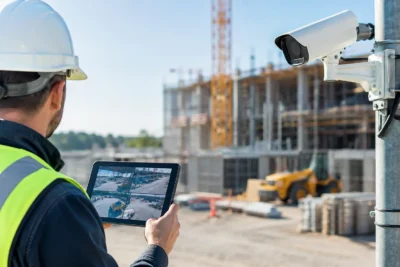
A package theft at the lobby, an unfamiliar person testing a hallway door, or a dispute over who entered a unit can become a serious problem fast. The best security systems for apartments do more than send phone alerts. They create usable evidence, discourage unwanted activity, and protect residents without violating lease terms or creating unnecessary changes to the property.
Apartment security is not one-size-fits-all. A renter in a single unit needs a different plan than a condo owner, property manager, or landlord responsible for several buildings. The right system starts with the areas that matter most: the unit entry, windows or patio doors, parking, mail and package areas, and any shared access point you control.
Start With Your Apartment’s Security Limits
Before selecting cameras, alarms, or smart locks, review the lease and ask management what is allowed. Many properties permit battery-powered devices inside the unit but restrict drilling, exterior cameras, lock replacements, and equipment installed in hallways or other common areas. Condo owners may also need HOA approval before adding exterior hardware or running cabling.
This does not mean security has to be limited to a basic doorbell camera. It means the installation method needs to fit the property. Renters often benefit from wireless sensors, interior cameras aimed at their own entry, and removable mounting methods. Owners and managed properties may have the option to install Power over Ethernet, or PoE, cameras, professionally wired access control, and a network video recorder.
A good rule is simple: protect the space you own or are authorized to manage, and avoid recording areas where neighbors have a reasonable expectation of privacy. Hallways, shared entrances, garages, and parking lots require clearer policies and, in many cases, property-management approval.
Best Security Systems for Apartments by Use Case
The strongest apartment setup combines layers of protection rather than relying on one device. A camera records what happened. A sensor reports when entry occurs. A properly configured lock or access system reduces the chance of unauthorized entry in the first place.
For renters: monitored entry and interior verification
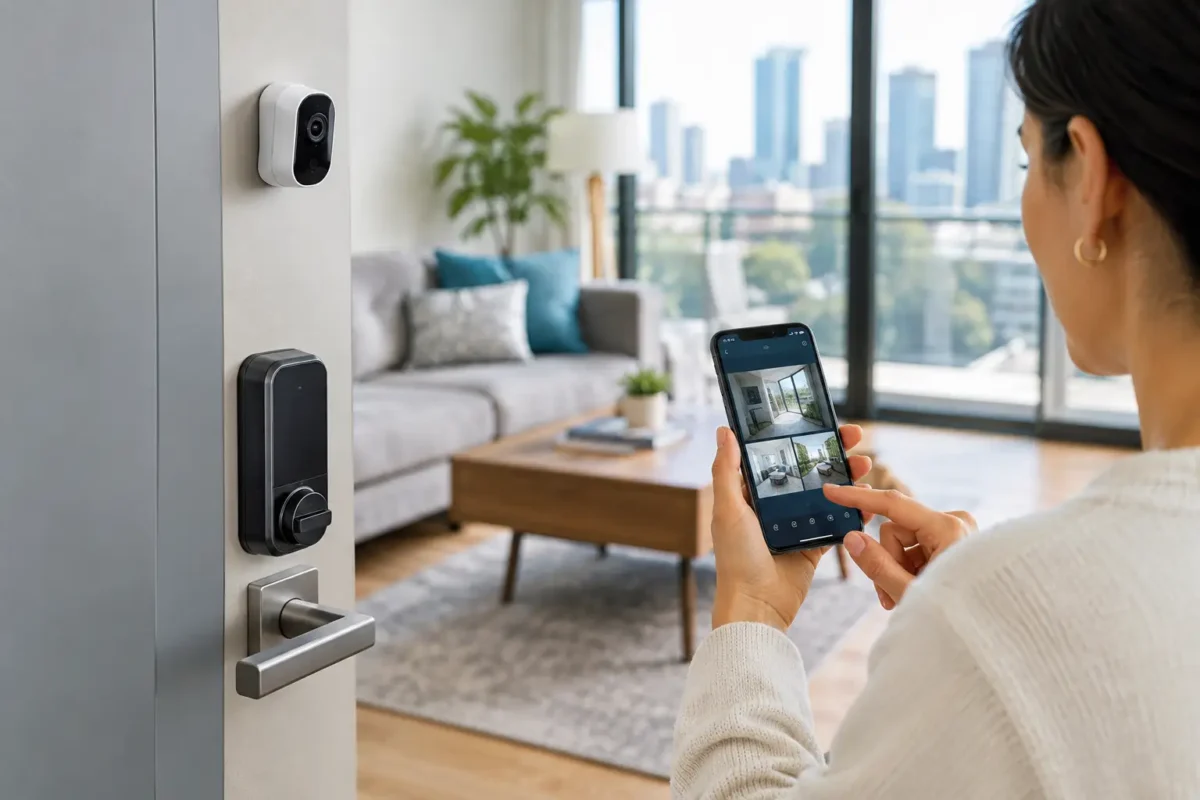
For most renters, the practical starting point is a battery-powered intrusion alarm with door and window contacts, a keypad or app, and professional monitoring if the building and budget justify it. Add an interior camera positioned to capture the front door and main living area, not private spaces such as bedrooms or bathrooms.
This approach works because it protects against the most common concerns without requiring permanent modifications. Door and window sensors provide an immediate alert when a protected opening is breached, while a camera can show whether the event was a resident, guest, maintenance worker, or an unknown person.
Choose equipment with local recording or a reliable cloud plan, clear night vision, and motion settings that can distinguish people from routine movement. Cheap cameras can produce constant false alerts, drain batteries quickly, and miss the moment that actually matters. A system that is ignored because it alerts all day is not doing its job.
For condo owners: PoE cameras and local recording
Condo owners with approval for installation have more durable options. A small PoE camera system with an NVR is often a better long-term choice than several consumer Wi-Fi cameras. PoE delivers power and data through one cable, which reduces battery maintenance and avoids depending on wireless signal strength at every camera location.
A professionally placed camera can cover a private entry, patio, assigned parking space, or storage area where permitted. The key is coverage, not camera count. One properly selected camera with the right lens, lighting, and mounting height can document an entry point better than three poorly positioned units.
For evidence-quality footage, use cameras with strong low-light performance, person and vehicle detection, and enough resolution to identify activity at the distance being monitored. If vehicle incidents are a recurring concern, a standard overview camera may show what happened, while a dedicated license plate recognition camera may be needed to capture plate details under the right lighting and approach angle.
For apartment buildings: controlled access and visible surveillance
Property managers and landlords need to think beyond an individual unit. Their priority is managing entry to common areas, documenting incidents, and making residents feel safer without turning the building into an operational headache.
A business-grade apartment security system may include controlled access at exterior doors, video intercoms, cameras at entrances and package rooms, coverage in garages and parking areas, and intrusion protection for leasing offices or maintenance storage. Access control gives management a cleaner way to add or remove credentials when residents move, employees change, or a key is lost.
Visible cameras also have deterrent value, but they need to be designed and installed correctly. Cameras mounted too high may capture only the tops of heads. Cameras pointed directly into sunlight can lose detail at the most important moment. An installer should evaluate lighting, entry paths, cable routes, network capacity, and recording retention before hardware is selected.
For higher-risk buildings: alarms, cameras, and response planning
Buildings with repeated package theft, vehicle break-ins, vandalism, or unauthorized access need a coordinated system. Start with cameras covering all exterior entry points and the routes people use after entering. Then add intrusion sensors to vulnerable doors, gate contacts where applicable, and panic buttons for onsite staff or a leasing office.
The system should also support a response plan. Decide who receives after-hours alerts, who can review footage, how incidents are documented, and when law enforcement should be contacted. Security equipment is most useful when staff know what to do after an alert arrives.
Do Not Overlook Recording, Networking, and Power
Many apartment security problems are not caused by the camera itself. They are caused by weak Wi-Fi, insufficient storage, incorrect timestamps, or a recorder that was never checked after installation.
For a single apartment, confirm that your router reaches the camera location with a stable signal. For a building or condo system, consider a dedicated security network and wired connections for fixed cameras. This improves reliability and keeps camera traffic from competing with resident or office devices.
Recording retention should match the risk. Seven days may be enough for a unit camera reviewed frequently. A property manager dealing with delayed incident reports may need 14, 30, or more days of retained footage. Storage requirements increase quickly with higher resolution, more cameras, and continuous recording, so capacity should be calculated before installation rather than guessed afterward.
A small uninterruptible power supply can also protect the recorder, network switch, and internet equipment through short outages. It will not replace full backup power, but it can prevent a brief outage from creating a gap in coverage or damaging equipment during a power fluctuation.
Smart Locks Require More Care Than Most People Expect
A smart lock can be useful for a condo, rental property owner, or managed building, especially when temporary credentials are needed for residents, cleaners, contractors, or maintenance staff. But renters should never replace a lock without written permission. Lease agreements often require the property to retain a working key or approve any hardware change.
For managed properties, choose locks and access credentials that can be administered consistently. The goal is not just remote unlocking. It is knowing who has access, removing credentials promptly, and avoiding a pile of untracked physical keys. Battery status, mechanical key override, emergency access, and fire egress requirements should all be part of the design discussion.
Get the Installation Right Before You Need the Footage
Apartment security is a long-term system, not a box of devices. The best result comes from matching camera types, alarm components, recording capacity, and installation methods to the building and its rules. A professional assessment can prevent blind spots, weak wireless coverage, poor night images, and equipment that management later requires you to remove.
For projects in Seattle and California, Tech Security USA can help evaluate the property, recommend business-grade equipment, coordinate installation, and provide same-day support when a system needs attention. Whether the goal is a protected apartment entry or a multi-building access and surveillance plan, start with the areas where a missed event would cost the most. The right design makes security easier to manage long after the installation crew leaves.
Posted on GoogleTrustindex verifies that the original source of the review is Google. I visited the Tech Security USA orange to install security cameras for my home. I found it a very professional company, with high quality products that were made me impressed. I recommend it to anyone who are looking a professional security cameras company in onrange city of Orange County CA.Posted on GoogleTrustindex verifies that the original source of the review is Google. “Edit (this review is not “spam” which the owner claims it is and the story is absolutely real however it was about 2 years ago and if I wasn’t shy back then(9th grade) or I wish I had done/said something about my dad and I being taken advantage of as it was a scam (quoted at around $150 but after having to wait 3weeks instead of 3 days for the guy to charge us $300 for a cheap screen that no longer had a haptic button or working Touch ID along with many white pressure dots along the edges). Do not go here. If you look at most of their 5-star reviews, they are older than 7 years. I went here recently to fix my iPad Air (3rd gen). The problem was the screen's backlight wouldn't work, so it would just show a black image. The technician said he could get it done for around $150 and in 2-3 days he would call us (my dad and I). After a week of waiting, we decided to call but to no avail. We went to the place to check up on the work done, if any. We got there and the iPad was in the exact same spot as the day we left it there. The guy told us it would be ready in about 4 days, no later, and that he would call us. We never got the call, so we went back after about another 3 days of waiting for a call (2 weeks now). After waiting, we went back to the store for the iPad, and it appeared to us as if he had just gotten started by breaking the screen to replace it. After another week, we came back and he pulled it out from a drawer saying something along the lines of, "I was about to call you guys." The screen was working, but it was clearly a cheap screen that was ordered online, and the Touch ID didn’t work anymore. The button was replaced with a non-haptic one. There are many white dots along the edges of the screen that look as if someone pressed their thumb down too hard for too long. The guy said with all the "extra" work done to it, the new total would be $300. When my dad and I looked at each other, we knew that wasn’t right, but I watched my dad grab his wallet and pay. I wish I had said something because we were taken advantage of, and after a week, the iPad's screen isn’t functioning properly as it feels unresponsive.Posted on GoogleTrustindex verifies that the original source of the review is Google. Will somebody please tell the owner to stop responding? She’s only validating the bad reviews.Posted on GoogleTrustindex verifies that the original source of the review is Google. Little messy inside but brought an old Moto Z2 Play in to finalize my failed battery self install. Done when promised, phone looked as good as new and works fine. I'm happy.Posted on GoogleTrustindex verifies that the original source of the review is Google. Garbage screen quality do not come here the screen is more different then a regular apple screen they use low quality screens the whole screen shattered and has black lines throughout it after a tiny drop with a screen protector.Posted on GoogleTrustindex verifies that the original source of the review is Google. I needed a battery replacement for my Huawei p10, the engineer fixed it in a few days (he had to order the battery) and it was reasonable priced, very good, thank youPosted on GoogleTrustindex verifies that the original source of the review is Google. Great location and employees. Really came through when I needed help. Recommend this place to anyone.Posted on GoogleTrustindex verifies that the original source of the review is Google. My go to place for any laptop and iPhone repairs. Also very friendly and experienced guy James.
Resent Posts
Surveillance System Maintenance Guide for Uptime
19 October 2026
How to Improve Alarm Response at Your Property
17 October 2026
Table of Contents