
Commercial Alarm Review for Business Owners
[yasr_overall_rating]
A back door propped open after closing, a glass-break event at 2:00 a.m., or an employee arriving before daylight can turn into a costly incident if the alarm system does not respond as designed. A commercial alarm review should look beyond a low equipment price and focus on what happens at the moment a real threat is detected: who is notified, how quickly they act, what information they receive, and whether the system continues working during a power or internet interruption.
For business owners, facility managers, and contractors, an alarm is not a stand-alone purchase. It is part of the property’s larger protection infrastructure, alongside cameras, access control, fire and life safety equipment, lighting, and reliable network connectivity. The right configuration depends on the building, operating hours, risk level, and response plan.
What a Commercial Alarm Review Should Measure
A useful review starts with coverage. The goal is not to place sensors in every possible location. It is to protect the paths an intruder is most likely to use and the assets that create the greatest loss if stolen or damaged. A jewelry store has different priorities than a daycare, a smoke shop, a construction site, or a parking facility.
Start at the perimeter. Doors, windows, roll-up gates, rooftop access points, and emergency exits should be evaluated for the right detection method. Door contacts can identify unauthorized entry, while glass-break detectors may be appropriate for storefront glass or windows that are vulnerable to smash-and-grab incidents. Motion detection adds another layer inside the building, especially in stockrooms, offices, and areas where high-value inventory is kept.
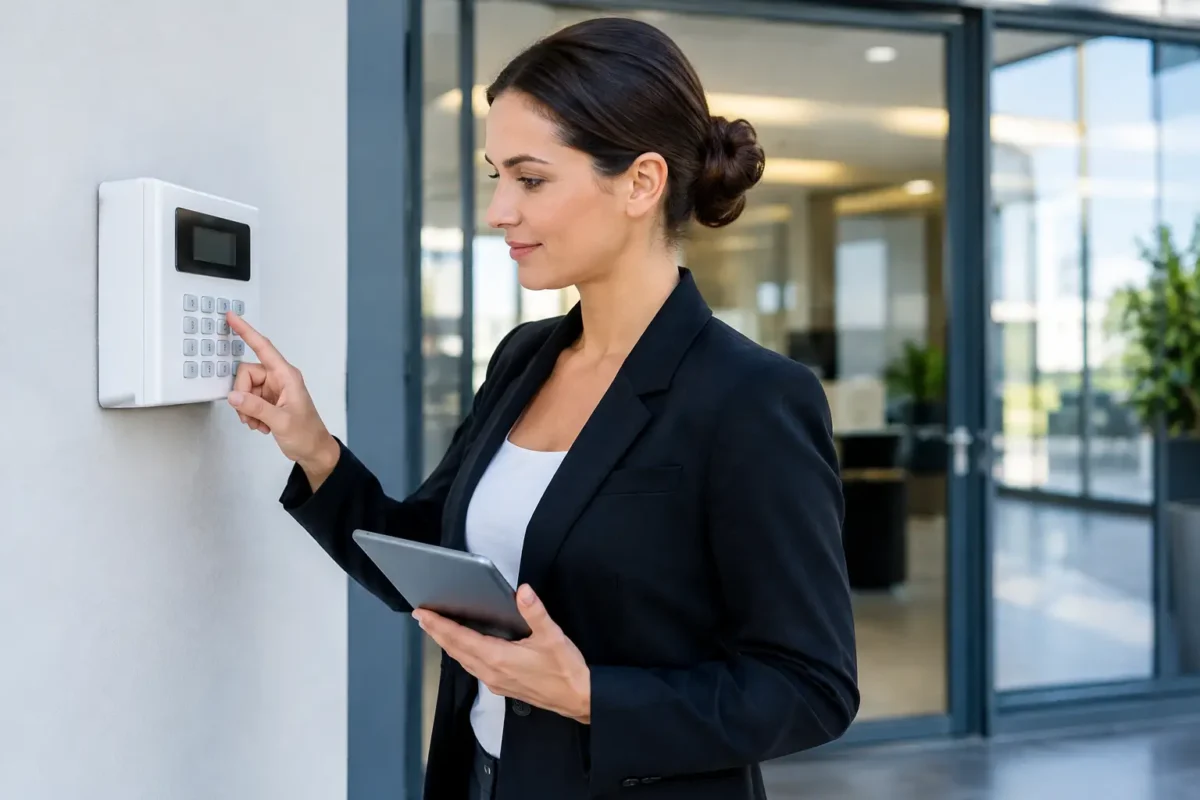
Then look at how the system will be used every day. If employees regularly enter early, leave late, or move between separate suites, the arming process must be simple enough to follow consistently. A system that is technically capable but confusing to arm will create false alarms, missed arming events, and unnecessary monitoring calls.
A quality review also checks whether the alarm panel, devices, and communication path are commercial-grade. Consumer equipment may work for a small, simple space, but it often falls short where multiple users, partitions, supervised sensors, integrations, or demanding service expectations are involved. Business-grade equipment is designed for more consistent use, clearer event reporting, and professional installation standards.
Detection Is Only One Part of the Response
An alarm signal has value only when it reaches the right people through a reliable path. This is where many low-cost systems reveal their limitations. Wi-Fi-only alarm communications can be vulnerable to an internet outage, router failure, or poor signal at the panel location. A commercial installation should evaluate cellular communication, dual-path communication, and battery backup based on the site’s risk profile.
Cellular backup is particularly valuable for businesses that depend on cable or fiber internet service. If an intruder damages an exterior utility connection or a storm takes the internet offline, the system may still be able to report an alarm. Dual-path setups add redundancy by using more than one communication method. They cost more, but for high-risk inventory, remote sites, or locations that cannot afford a reporting gap, the added reliability can be justified.
Professional monitoring also deserves close attention. Ask what occurs after an alarm is received, how verification is handled, which contacts are called, and how dispatch procedures are managed. Monitoring cannot guarantee police response times, which vary by jurisdiction and call volume. It can, however, provide a defined escalation process when the property is unattended.
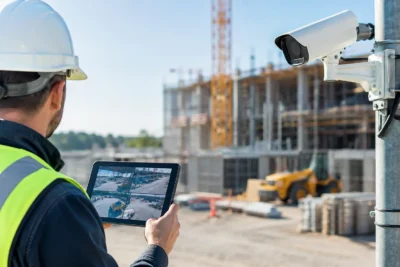
For many commercial properties, video verification improves the response plan. When an alarm event is paired with cameras at entry points and interior risk areas, managers can review what triggered the event instead of responding blindly. This can help distinguish a legitimate intrusion from an employee error, an open door, or an environmental issue. It also provides useful documentation after an incident.
Alarm Installation Quality Affects Long-Term Performance
The best alarm hardware can still underperform when installation is rushed. Sensor placement, panel location, wiring practices, wireless signal strength, battery condition, labeling, and final testing all affect the system’s reliability. This is why a commercial alarm review should include the installation scope, not just the product list.
Hardwired sensors are often a strong choice for new construction, remodels, and properties where cable can be run cleanly. They reduce ongoing battery maintenance and can provide dependable long-term operation. Wireless devices offer faster deployment and may be the practical choice in finished spaces where opening walls is not reasonable. Neither option is automatically better. The right choice depends on the building structure, schedule, aesthetics, and expansion plans.
False alarms should be addressed before installation, not after. Motion sensors must be selected and positioned with HVAC airflow, pets, hanging displays, open stairwells, and changing temperatures in mind. Door contacts need secure alignment. Employees need clear instructions for arming, disarming, and responding to trouble notifications. Small setup details prevent recurring operational problems.
A professionally installed system should also be tested under realistic conditions. That includes verifying every opening device, testing motion coverage, confirming alarm transmission, checking backup power, and making sure the correct users receive notifications. Documentation matters as well. When a manager changes, a vendor needs service access, or an incident occurs months later, organized records save time.
Match the System to the Type of Risk
A basic intrusion system may be adequate for a small office with limited after-hours exposure. A retail business with visible inventory usually needs more deliberate perimeter protection, interior coverage, and camera integration. Construction and job sites may need temporary equipment, cellular connectivity, weather-conscious device placement, and mobile notification because there may be no permanent internet service.
Daycares need a different approach. Their focus often includes controlled entry during operating hours, staff safety, and clear procedures that do not disrupt children or create confusion during an emergency. Jewelry stores may require layered protection around showcases, safes, employee-only areas, and after-hours entry points. Parking facilities may combine intrusion detection for offices and equipment rooms with cameras and license plate recognition at vehicle access lanes.
The common requirement is not a specific sensor or panel. It is a design that reflects how the property actually operates. A generic package can be a starting point, but it should not replace a site review.
Questions to Ask Before You Approve a Proposal
A proposal should make clear what is being protected, how alarm events are reported, and what support is available after the system is turned over. If those details are vague, the price alone does not tell you whether the solution is a good value.
Ask whether the design identifies all perimeter openings and high-risk interior areas. Confirm whether monitoring is included, which communication path is used, and whether cellular backup or dual-path communication is recommended. Find out how many users can access the system, whether separate areas can be armed independently, and how the system will integrate with existing cameras or access control.
Also ask about warranty coverage, service response, training, and future expansion. A property may add a storage room, a second suite, additional cameras, or another entrance over time. Choosing an alarm platform that can grow with the business can prevent a full replacement later.
The Value of One Accountable Security Partner
Security systems are easier to manage when hardware selection, design, installation coordination, and support are handled with one clear point of accountability. Tech Security USA helps commercial customers build protection systems around the property rather than forcing the property into a prebuilt package. That approach is especially useful when alarms need to work alongside surveillance cameras, network equipment, or specialized site requirements.
A strong commercial alarm system should be quiet when business is normal and decisive when something is wrong. Choose the equipment, installation path, and support plan that make that outcome more likely long after the initial installation is complete.
Posted on GoogleTrustindex verifies that the original source of the review is Google. I visited the Tech Security USA orange to install security cameras for my home. I found it a very professional company, with high quality products that were made me impressed. I recommend it to anyone who are looking a professional security cameras company in onrange city of Orange County CA.Posted on GoogleTrustindex verifies that the original source of the review is Google. “Edit (this review is not “spam” which the owner claims it is and the story is absolutely real however it was about 2 years ago and if I wasn’t shy back then(9th grade) or I wish I had done/said something about my dad and I being taken advantage of as it was a scam (quoted at around $150 but after having to wait 3weeks instead of 3 days for the guy to charge us $300 for a cheap screen that no longer had a haptic button or working Touch ID along with many white pressure dots along the edges). Do not go here. If you look at most of their 5-star reviews, they are older than 7 years. I went here recently to fix my iPad Air (3rd gen). The problem was the screen's backlight wouldn't work, so it would just show a black image. The technician said he could get it done for around $150 and in 2-3 days he would call us (my dad and I). After a week of waiting, we decided to call but to no avail. We went to the place to check up on the work done, if any. We got there and the iPad was in the exact same spot as the day we left it there. The guy told us it would be ready in about 4 days, no later, and that he would call us. We never got the call, so we went back after about another 3 days of waiting for a call (2 weeks now). After waiting, we went back to the store for the iPad, and it appeared to us as if he had just gotten started by breaking the screen to replace it. After another week, we came back and he pulled it out from a drawer saying something along the lines of, "I was about to call you guys." The screen was working, but it was clearly a cheap screen that was ordered online, and the Touch ID didn’t work anymore. The button was replaced with a non-haptic one. There are many white dots along the edges of the screen that look as if someone pressed their thumb down too hard for too long. The guy said with all the "extra" work done to it, the new total would be $300. When my dad and I looked at each other, we knew that wasn’t right, but I watched my dad grab his wallet and pay. I wish I had said something because we were taken advantage of, and after a week, the iPad's screen isn’t functioning properly as it feels unresponsive.Posted on GoogleTrustindex verifies that the original source of the review is Google. Will somebody please tell the owner to stop responding? She’s only validating the bad reviews.Posted on GoogleTrustindex verifies that the original source of the review is Google. Little messy inside but brought an old Moto Z2 Play in to finalize my failed battery self install. Done when promised, phone looked as good as new and works fine. I'm happy.Posted on GoogleTrustindex verifies that the original source of the review is Google. Garbage screen quality do not come here the screen is more different then a regular apple screen they use low quality screens the whole screen shattered and has black lines throughout it after a tiny drop with a screen protector.Posted on GoogleTrustindex verifies that the original source of the review is Google. I needed a battery replacement for my Huawei p10, the engineer fixed it in a few days (he had to order the battery) and it was reasonable priced, very good, thank youPosted on GoogleTrustindex verifies that the original source of the review is Google. Great location and employees. Really came through when I needed help. Recommend this place to anyone.Posted on GoogleTrustindex verifies that the original source of the review is Google. My go to place for any laptop and iPhone repairs. Also very friendly and experienced guy James.
Resent Posts
Surveillance System Maintenance Guide for Uptime
19 October 2026
How to Improve Alarm Response at Your Property
17 October 2026
Table of Contents